
INTERVIEW WITH An jin kyeong
As a child, I was influenced by my mother and inherited my craftsmanship. Although my mother was not an artist, she was really good at making things with her hands. My First Birthday I held a pencil. A year later, I started drawing. I also liked comic books and picture books that children read, and I started to enjoy looking at the pictures in the picture books and following them. When I was in elementary school, I had a general education. This was because I usually wanted to develop social skills that I could socialize with children. Even in elementary school, I always ranked first in the arts and sports subjects. I started learning art in earnest when I was in middle school. I studied Western art and won awards at various contests and contests held across the country. The painting was really good and I set my career path to art from this. The reason why I thought of becoming a painter in earnest was after traveling to Europe in 2007.
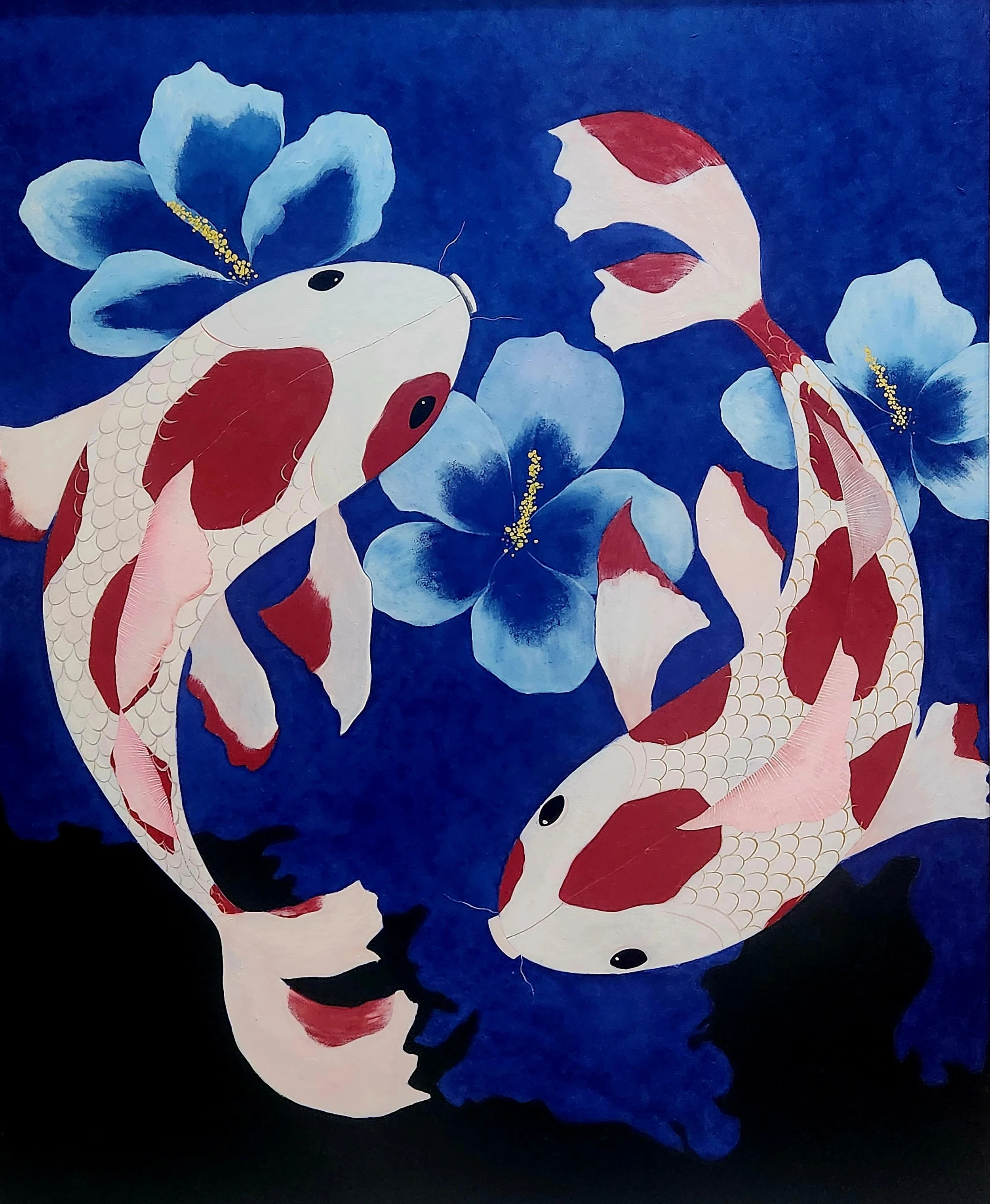
‘‘I thought my life wouldn’t exist without painting’’
I visited Austria, France, the Czech Republic, the U.K. Germany, and Japan, and I envied seeing many artists freely draw while traveling to different countries. Art education in Europe was free. Rather than a limited educational method as in Korea, it threw open imagination to learners by asking open questions, which really woke up creativity. And the artwork I saw at the Louvre was really great and the best. From this, I dreamed of becoming the best artist and an artist who touches the world. I really liked the delicate and meticulousness of the oriental art I saw in Japan, where I traveled, and I thought it was similar to my personality. The work that combines the modern and traditional aspects was really cool. When I was in college, I held a lot of exhibitions overseas. I promoted my work in many countries, including Japan, India, America, France, and so on, and I put a lot of effort into becoming the best artist. Currently, I have been chosen as the top 60 masters winner in Italy. I will continue to put more effort into becoming the best artist to promote the tradition and modern sense of Korean art to the world.
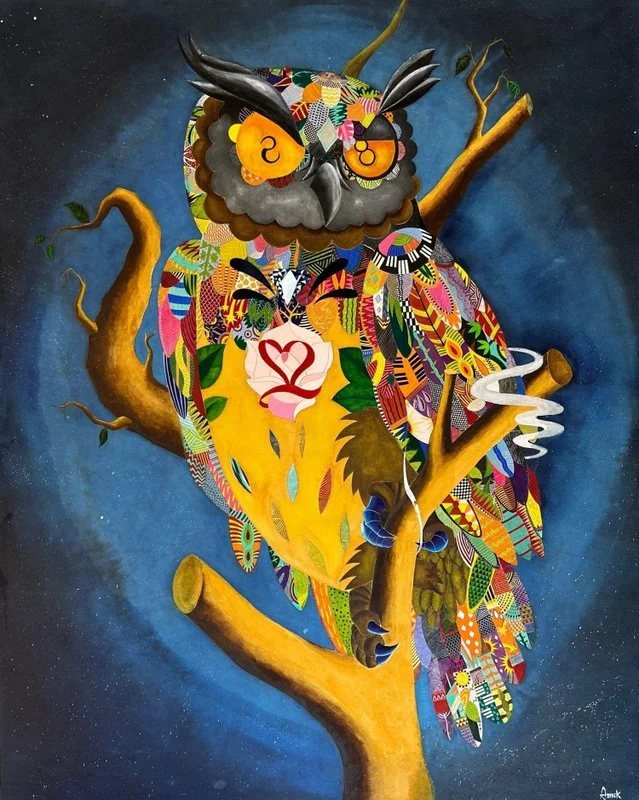
As a child, how did your mother’s craftsmanship influence your earliest understanding of making art?
My mother didn't major in art, but she loved making it. She used a lot of stencils and clay, for example. She has a great sense of art. I probably inherited my mother's delicate and meticulous personality and creativity. My mother hated being stereotyped. She always loved being free and giving joy to people. I'm really proud of this. Of course, I think I had a good influence on my performance in arts and sports when I was in school, and I think I gained confidence.
You held a pencil at a very young age and began drawing soon after—how do you see this early start reflected in your work today?
For me, the act of 'painting' was more than just a representation of images, it was the most instinctive way to communicate with the world and build my own language. I still remember the cool and firm sensation of the pencil I first held in my hand when I was very young. Looking back, however, what really fascinated me was not just 'what to draw' but rather curiosity about the essence of the material 'what and how to express it'. As a child, I was unhappy with a single pencil. I was fascinated by the blunt and thick texture of crayons even when I drew lines with pencils, and I felt a sense of liberation beyond words as I saw the abnormal coincidence effect of the paint spreading through the water. I experienced the thrill of creating a tiny universe in the paper when materials with different properties were mixed, collided, and created new textures. The process of creating new techniques by combining different materials itself, not just using the given tools, was the biggest play and beginning of artistic exploration for me. This childhood pure spirit of inquiry has become the most solid foundation that sustains my working world after a long time. Most of the works I'm presenting are not limited to a single medium. I still like to hear the unique voices of different materials, and I feel joy in the process of placing them harmoniously on one screen. In particular, the "collage" technique, one of the keys to my work, is a modern extension of my childhood habit of mixing ingredients.
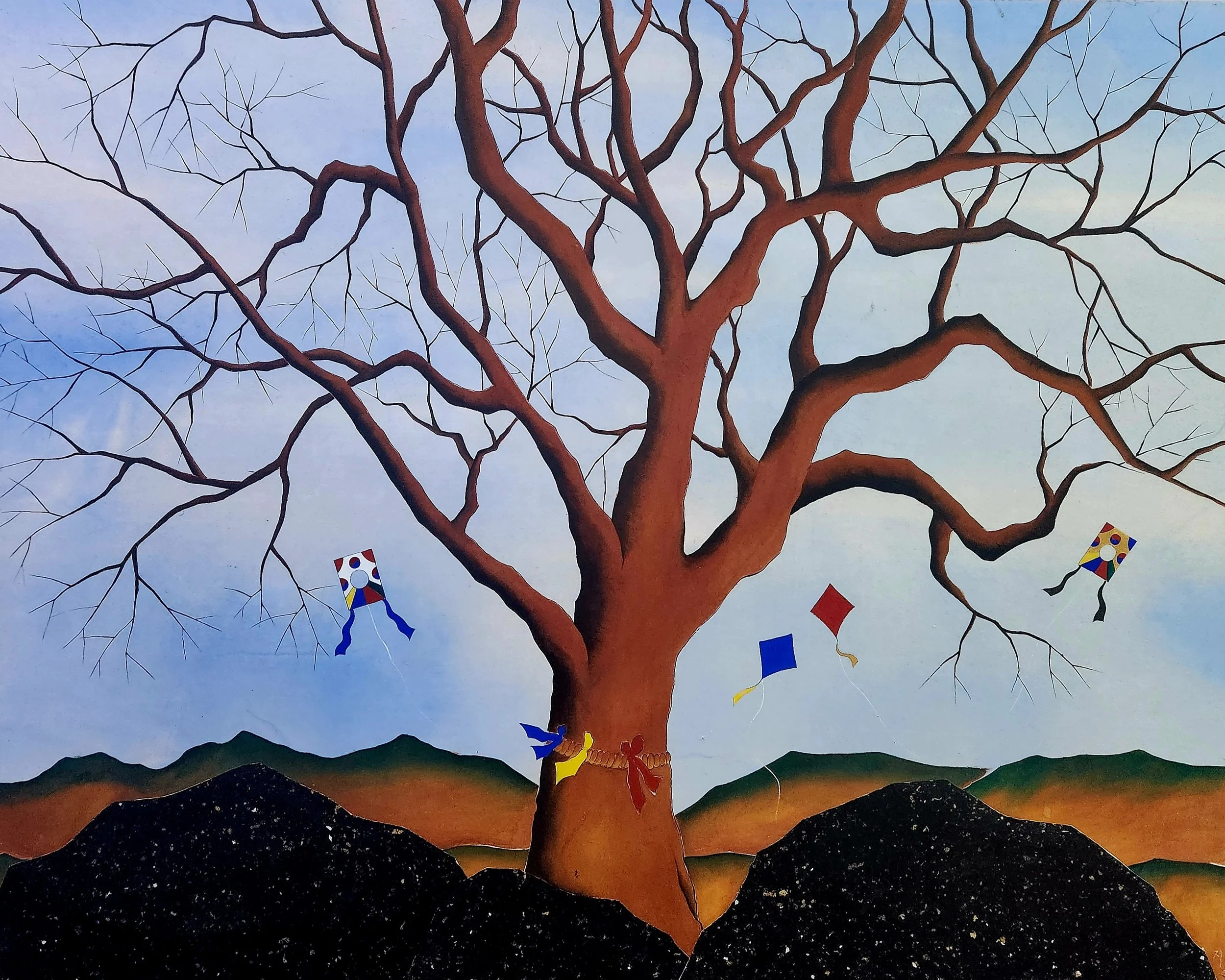
How did your interest in comic books and picture books shape your visual imagination and storytelling approach?
First of all, I think I learned to imitate the picture body. I think it started with imitation, drew the same, then transformed, and created. If there is only one thing, I think this also gave me the ability to write. By learning the structure in which images and texts interact in cartoons and picture books, I was able to develop the power to replace visual language with literary narratives. This experience is also closely related to the collage technique of stacking multiple materials in layers in my current work. The solid foundation of imitation and literary imagination that I built in my childhood became a valuable foundation for me to build an artistic worldview rich like a story on the canvas today.
4During your school years, you consistently excelled in arts—when did you first realise that art would become your life path?
Since childhood, art has been everything in my life. I thought my life wouldn't exist without painting. However, as in all the world, it is difficult for art to continue life. I put art aside to make money, taught children, and tried other things, but I was not tired and happy. I think I realized that art will be my lifelong path only after I felt that the time when I was happy was when I drew completely.
What was the turning point when you began studying Western art seriously in middle school?
It was a very important turning point in my art journey that I began to step into Western painting when I was in middle school. At that time, I was deeply fascinated by the three-dimensional effect created by light and shadows and the intense rape properties unique to Western painting, beyond just the act of painting. For example, when I was in high school, I saw and felt Mona Lisa's work at the Louvre Museum in Paris, and it was a great shock and excitement to me that I could implement a reinterpreted reality" that reflected the artist's emotions and interpretations on the canvas, rather than replicating objects as they are. During this period, I learned to embody the free imagination I had raised through cartoons and picture books in a more solid formative language, laying the foundation for precise drawing and coloring. As a result, studying Western painting in middle school became a practical foundation that made me decide to make art my lifelong career, and the first step toward completing the present abstract and complex work style.
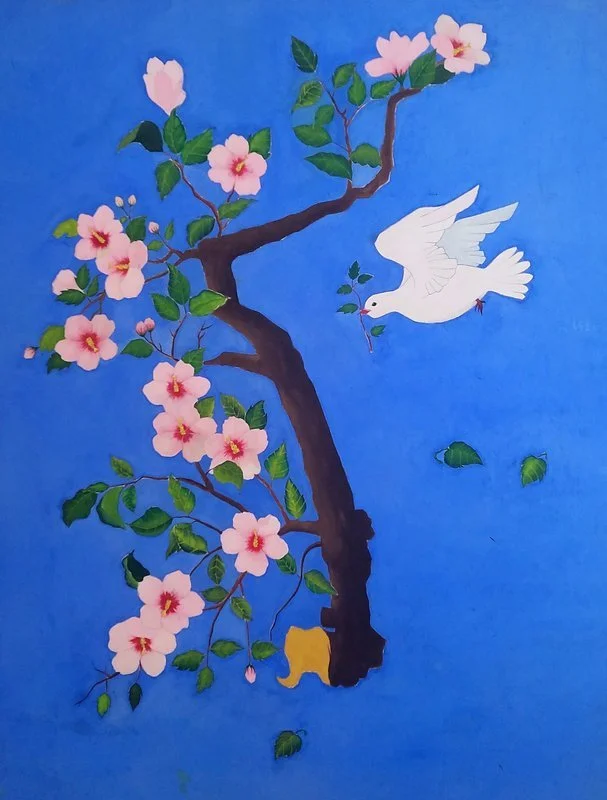
Winning awards in national art competitions at a young age, how did this recognition affect your confidence and ambition?
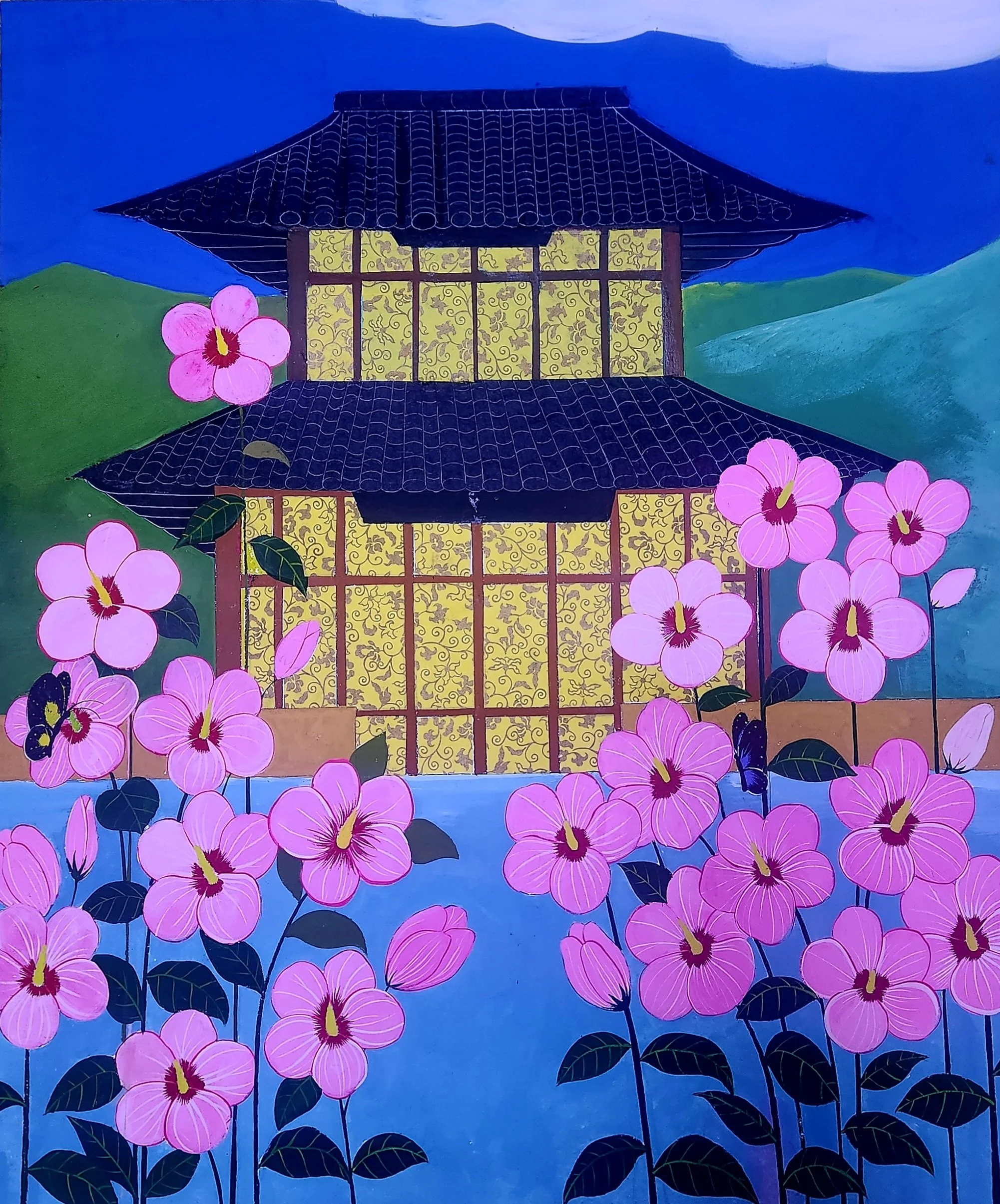
As a child, my win and recognition at the National Art Competition was a powerful driving force that convinced me of my path as an artist. This experience has had the following profound effect on my confidence and ambition. First, it is the establishment of an artistic identity. The objective evaluation I received at an early age gave me confidence that painting would be a lifelong path beyond just a hobby. It also led to a spirit of challenge. His achievements on the big stage stimulated his ambition to move to a wider world, and later laid the foundation for participation in international exhibitions and establishing a global vision. Lastly, it is a sense of responsibility for creation. Beyond technological achievements, he had a greater ambition to deliver a unique message that connects Korean tradition and modernity to the world. The confidence that I gained in the beginning became a source of artistic courage that allowed me to constantly explore new materials and create my own techniques without identifying me.
Your 2007 travels across Europe were a defining moment—what experience most deeply changed your perception of being an artist?
The last places I went were Austria, Czech Republic, Germany, Britain, France, and Japan. I went to Europe via Japan, and I personally remember seeing the work at the current Japanese art museum and the work at the Louvre Museum in France. As mentioned above, I remember being really envious of the people watching the Mona Lisa. I think I have been working hard so far with the idea of becoming an artist in the spotlight. And I went to Schubert's birthplace in Vienna, Austria, and after hearing about his life, I really felt that he made a significant achievement in music. French street artists also left an impression. It was because my ideal image was to be free from restraints. After that, I started to create and draw as much as I could without seeing or drawing anything.
You mention being inspired by both European freedom in art education and Japanese aesthetics—how do these influences come together in your practice?
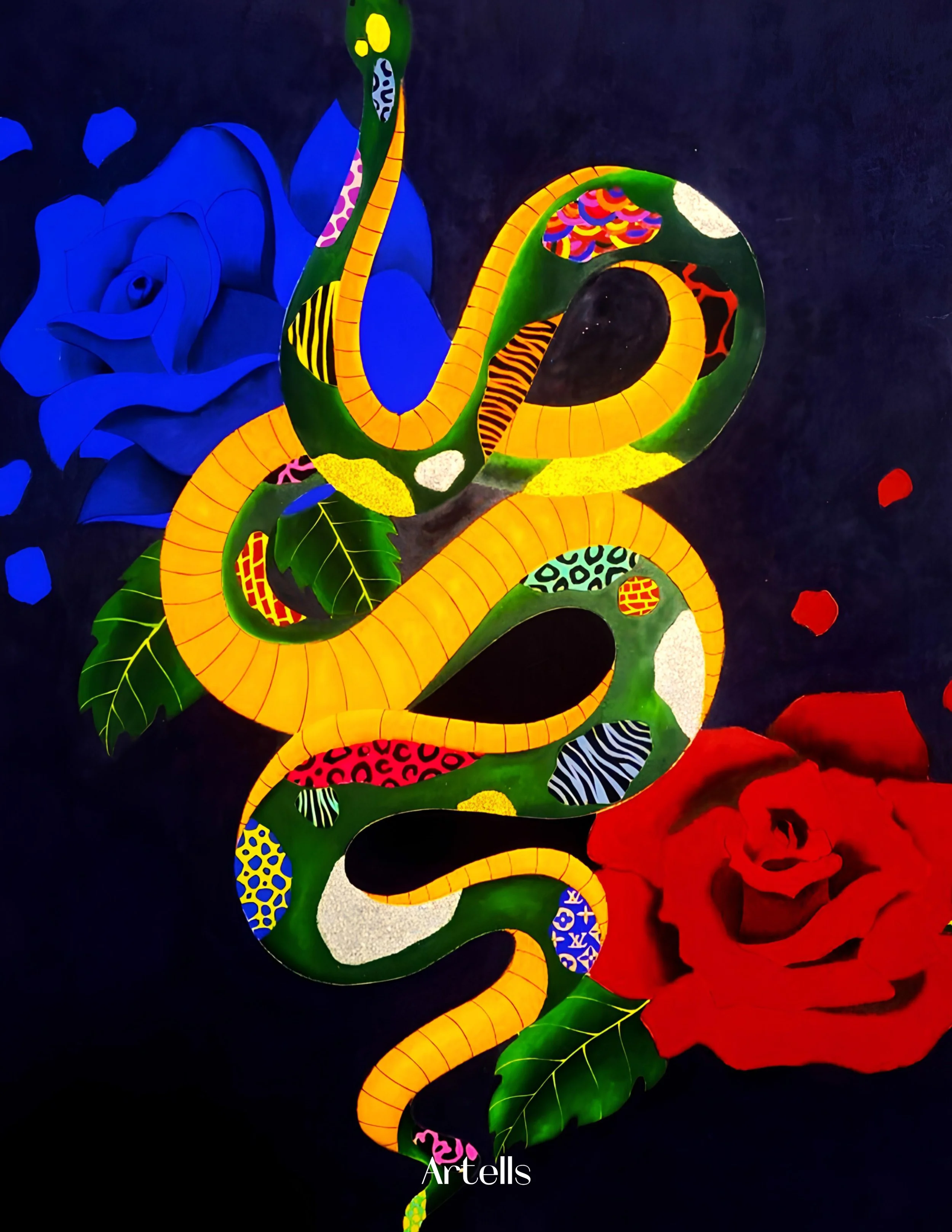
The European free artistic soil and Japan's delicate aesthetic features are harmonized in the form of 'complementation of form and content' in my work. This is the result of a combination of a perspective on the world and an attitude of moving it to the canvas beyond a simple mixture of techniques. First, the freedom of European art education instilled in me a bold spirit of experimentation and experimentation, regardless of materials and techniques. Western artistic traditions value the energy of "extraction" that brings out the artist's inner world. Their attitude of respecting the artist's inner and original personality rather than the stereotyped form has been the most reliable psychological background for me to create my own technique by mixing and collaging various materials ranging from pencils, crayons, and paint. The European way of thinking about "no fixed answer" allowed me to recognize the space called the canvas as a huge laboratory. On the other hand, Japan's unique aesthetics deeply influenced the attitude toward the work and the elaborate way it was expressed. One of the keys to Japanese aesthetics is the detail and neat order that persistently delves into the essence of things. Japanese aesthetics have the power to refine and condense the energy if European art is a process that exudes energy to the outside world. This delicacy serves to keep European-style free experimentation at its center so that it does not become disorderly. It's thanks to this refined aesthetic that the fragmented materials placed on the canvas make you breathe in one organized visual order. As a result, my work is located at the intersection of Europe's dynamic energy and Japan's sophisticated aesthetics. The work finally has a multi-layered narrative by adding a Japanese-style delicate touch or a restrained sense of space on top of the freely unfolded collage and bold coloring techniques. These two conflicting cultural influences complement each other rather than collide in me, and as a Korean artist, they become valuable assets to complete the greater vision of 'harmony between tradition and modernity'.
Having exhibited internationally during your university years, how did these global experiences shape your artistic vision?
The international exhibition experience that has continued since college became a decisive opportunity to expand my artistic horizons and expand my personal narrative of 'I' to global universality. At that time, overseas exhibitions were a process of exploration to directly communicate with visitors and artists from various cultures and confirm the objective position of my work, beyond just showcasing the work. In articular, seeing people from different languages and backgrounds respond to the texture, color, and Korean sentiment contained in my work, I deeply felt that art is the most powerful communication tool that transcends language. These global experiences have established two key artistic visions for me. The first is "globalization of the local area." When elements of traditional Korean aesthetics were translated into modern formative language, I was convinced that the most personal and Korean things could be the most cosmopolitan as I saw them gain more original value overseas. The second is the attitude of breaking boundaries. Witnessing art scenes in many countries, I was able to read the flow of modern art in which boundaries between materials, techniques, and genres become meaningless. This is what drives me to get rid of fear and free thinking in creating techniques that are now mixed, collaged, and unstructured with different materials like pencils, crayons, and paints. After all, my international experiences in college helped me establish my identity as a "global artist" who constantly asks and communicates with me on the huge canvas of the world, rather than being confined to the framework of "Korean artist." This vision forms the basis of my current work and will continue to guide me in building a unique art world that I can communicate with people all over the world.
As someone aiming to bridge traditional and contemporary Korean art on a global scale, what message do you hope your work communicates to the world?
By fusing traditional painting, a traditional Korean aesthetics, with modern abstraction, I would like to build a universal art language that connects the past and the present. Through the work, I hope that visitors will have time to reflect on their subconscious by exploring the contact point between the inside and the outside of humans. Also, I dream of a world where art extends beyond galleries to goods in everyday life and everyone enjoys its value. After all, my goal is to empathize with the world and convey the message of coexistence with the most Korean identity.
Discover more:
