
How to Write an Artist Statement That Sounds Like You
An artist statement gives a reader a way into your work. It does not need to explain every possible interpretation. Start with the decisions you actually make in the studio.
Answer three concrete questions
What do you make? How do you make it? What keeps drawing you back to it? Write a plain answer to each before worrying about style. Name your materials and the subjects, experiences or questions you return to. If your statement could describe almost any artist, replace an abstract phrase with a specific detail from your practice.
Connect the statement to this work
A general practice statement and a description of one artwork are different tools. For an application, make sure the submitted piece is recognisable in the text. Mention the process or decision that matters to this work. You do not need to force a complete life story into a short form field.
Try a simple structure
Use this as a starting point, then rewrite it in your own voice: “I make [type of work] using [materials or process]. I return to [subject or question]. In this work, [specific decision] invites the viewer to notice [detail or relationship].” The brackets should become facts, not ambitious claims. Read the result aloud and simplify anything you would never say in conversation.
Keep the biography separate
A biography can contain your location, background and relevant experience. The statement should concentrate on the work. Follow the requested word limit, check names and titles, and remove awards or exhibitions that do not help answer the question. Ask a trusted reader what they expect to see after reading the text; their answer will tell you whether the statement is specific enough.
From our artist submissions: Jacquei Butcher | IJaxCre8
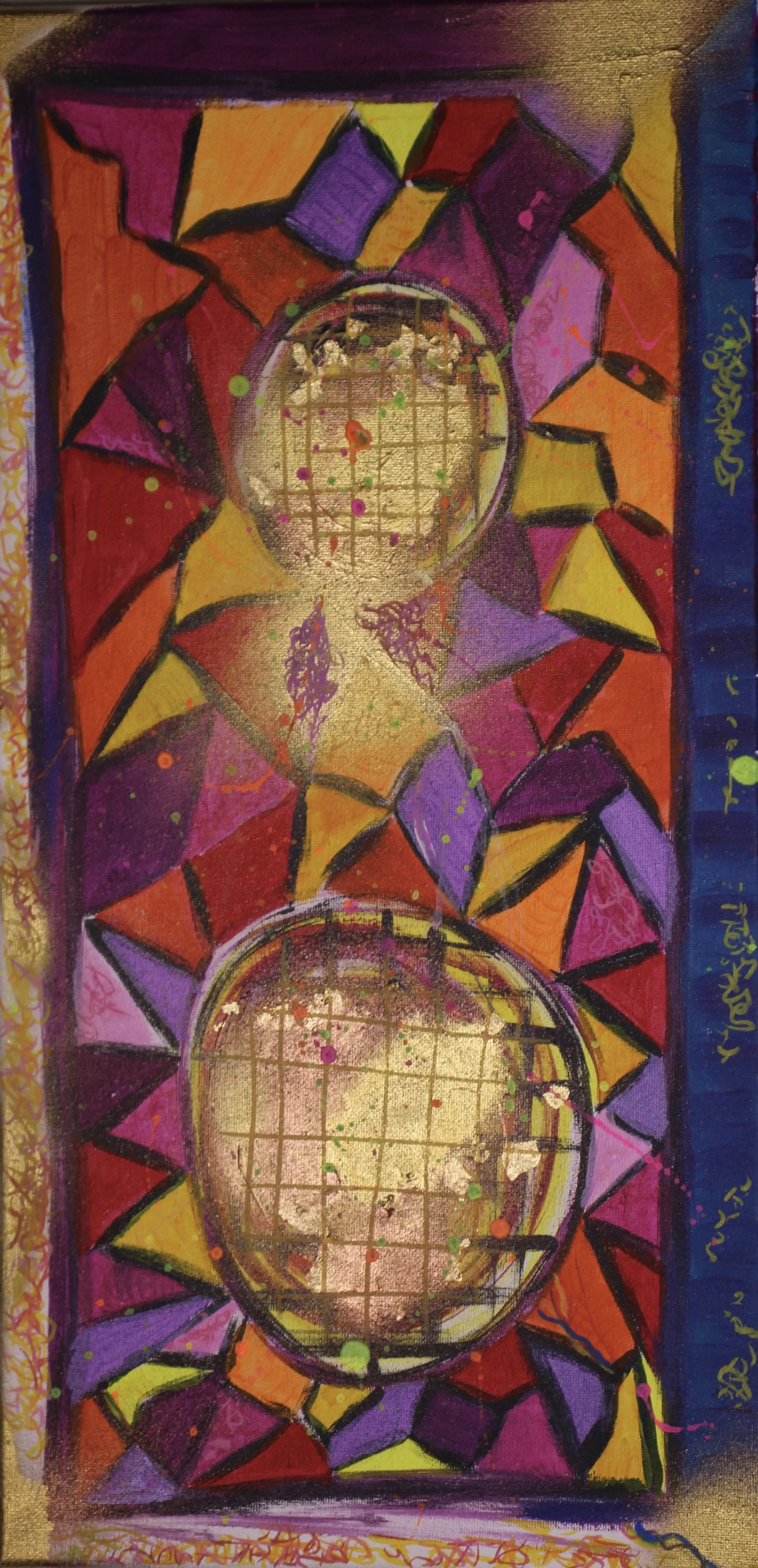
Jacquei Butcher, who works as IJaxCre8, describes an acrylic practice connected to people, nature, memory and emotion. Glass Speaker combines acrylic paint, spray paint and diamond dust. Naming those materials gives the reader a concrete point of entry before moving into the larger emotional concerns of the practice.
This work was shared through Arrival’s submissions. The exhibition photograph documents a separate past show.
