
Put Your Art in Public
You make the work.
You spend hours with it — making, changing, questioning, finishing. And eventually, there is the moment when you want it to leave your studio and meet someone else.
But what if that meeting happened somewhere much bigger?
A screen in the middle of a city.
A busy street.
A place where thousands of people pass every day.
That is the idea behind
Art Seen creates opportunities for artists to have their work displayed on public digital screens in cities around the world.
Instead of waiting for someone to walk into a gallery, your work can appear where people are already looking — in the middle of everyday life.
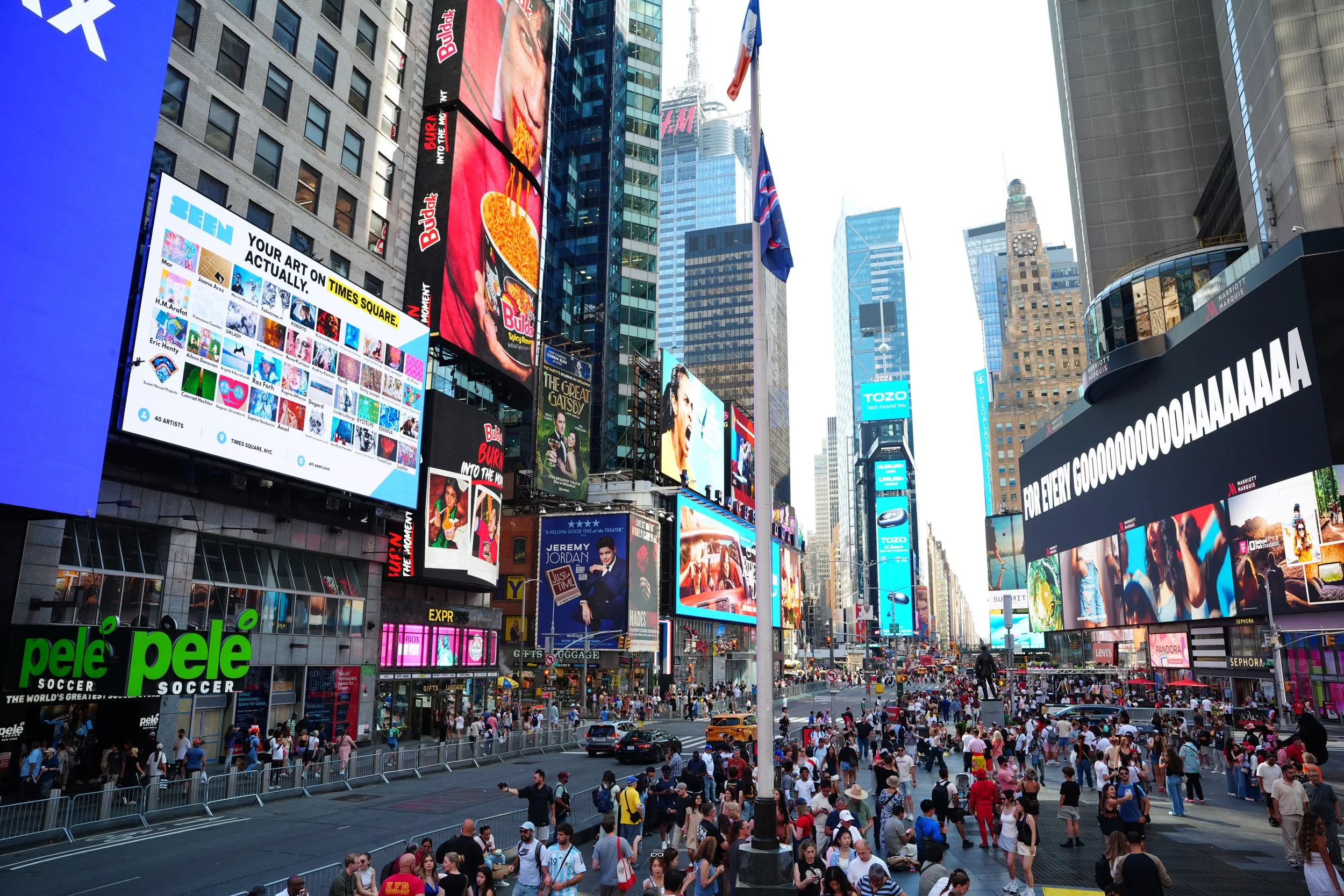
Art Seen brings 40 artists together on a digital screen in the heart of Times Square, New York — July 2026.
Your work. In public.
Art Seen is built around a simple idea:
art does not always need a gallery wall to be seen.
Artists can submit their work for different digital screen showcases, with opportunities changing across locations and programmes.
Depending on the showcase, artists may be able to appear on screens in places such as London, Athens, Tokyo and New York, with different formats, locations and participation options.
Some showcases bring several artists together on one screen.
Others offer a more dedicated presence for a single artist.
The location changes.
The screen changes.
But the idea stays the same:
your work gets a place in the city.
More than one way to be seen
Art Seen does not offer one single exhibition format.
Its screen opportunities can take different forms depending on the location.
Shared screen showcases
Several artists appear together as part of one digital presentation.
This creates a collective exhibition in a public space — different practices, different images, one screen.
For artists who want to experience public digital exposure without taking over an entire screen, this can be a way to place their work alongside other creative voices.
One screen. Many artists.
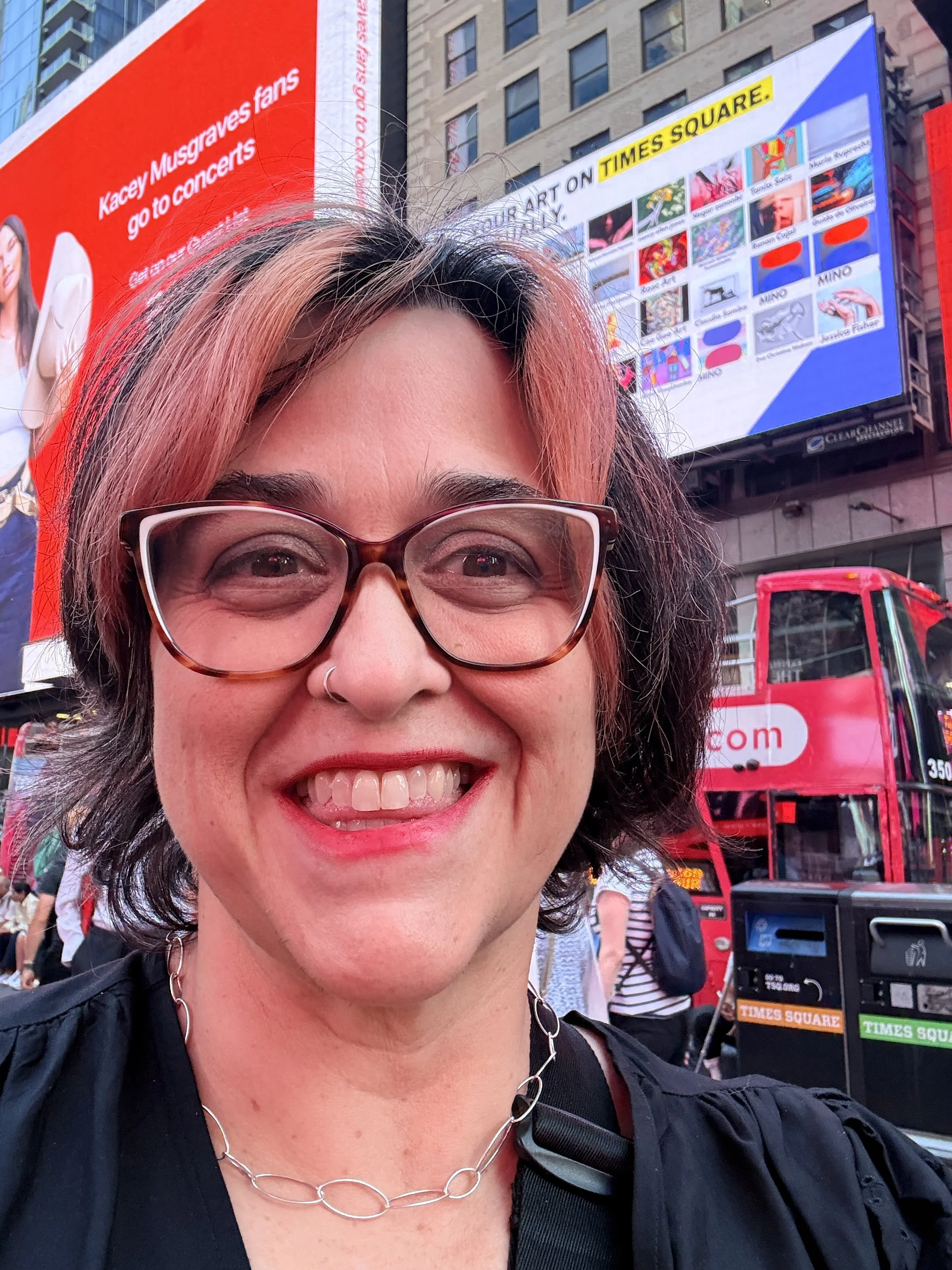
A moment from Times Square, New York, where Art Seen artists were displayed on the big screen — August 2026.
Photo by Tania Saiz (@stroke_maven).
Solo screen takeovers
Some opportunities are designed around a single artist.
Instead of sharing the screen, your work takes over the available display for the agreed showcase period.
It is a different kind of experience — more space, more focus, and more time for your work to hold the viewer's attention.
One artist. One screen. Your work in the city.
Different cities, different possibilities
Art Seen also works across different locations and screen formats.
That means the opportunity is not always the same.
A European screen showcase may have different terms from a London presentation. A Tokyo takeover may work differently from a Times Square billboard.
The city is part of the exhibition.
Where could your work appear?
The locations featured by Art Seen are part of what makes the programme different from a traditional online showcase.
Your work can be presented in places where people are moving through their everyday lives — streets, commercial areas and public spaces.
Some of the showcase formats presented by Art Seen include:
The available locations and showcases can change, so the current opportunities are always worth checking before applying.
What kind of work can be shown?
Art Seen is not limited to one traditional artistic medium.
Its showcase requirements can include visual work such as painting, photography, illustration, digital art and design, depending on the specific screen opportunity.
The important question is not simply what medium do you use?
It is:
Can your work live on a public screen?
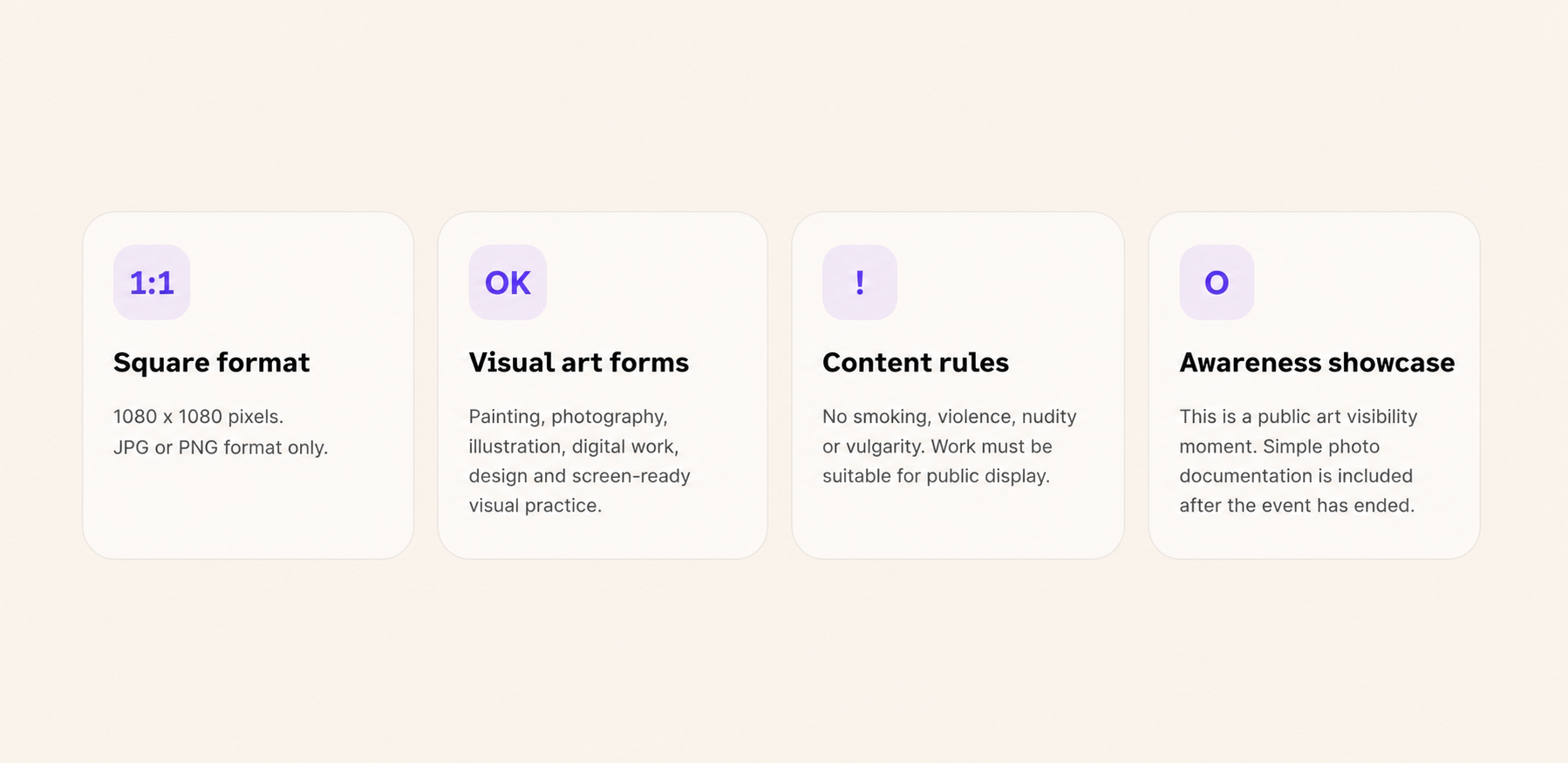
Each showcase has its own requirements for format, dimensions, content and suitability for public display.
So before submitting, always check the requirements of the particular opportunity you are interested in.
Choose your moment
One of the interesting things about Art Seen is that the opportunities are not necessarily tied to one permanent exhibition.
Screen showcases have their own deadlines, available slots and display dates.
Some programmes have a limited number of artist places.
That means timing matters.
You may find an opportunity that feels right for your work, but only a certain number of spaces may be available.
Sometimes the question isn't whether your work belongs on the screen.
It's whether you catch the right screen at the right time.
What happens when you apply?
The process depends on the showcase, but the basic idea is straightforward.
You choose an available opportunity, review its requirements and submit your work and information through the application process.
For showcases where artists select a particular slot, availability may also determine which places you can choose.
Before applying, pay attention to:
the application deadline
the number of available artist places
the screen location
the showcase date
the artwork format requirements
the public-display requirements
the participation fee
the specific terms and conditions
Because each screen opportunity can have its own conditions, don't assume that the rules for one showcase automatically apply to another.
Read the details. Then choose the screen that feels right for your work.
Your work still belongs to you
Having your work displayed publicly does not mean giving away ownership of it.
Art Seen's terms set out how artwork submission, artist rights, permissions and the public display of work are handled.
The specific conditions can vary between showcase types, so artists should read the relevant terms before submitting.
This is particularly important when your work contains material that requires additional permissions or when you are submitting work on behalf of someone else.
Your image may travel further. Your rights still matter.
The city becomes part of the work
There is something different about seeing your artwork online and seeing it appear in the physical world.
Online, someone has to find you.
On a public screen, your work can simply be there.
A person walking to work.
Someone waiting at a crossing.
A visitor exploring a new city.
Someone who has never heard your name before.
For a few seconds, they encounter your work.
They might stop.
They might take a photograph.
They might look you up later.
Or they might simply carry the image with them.
You never know who is looking.
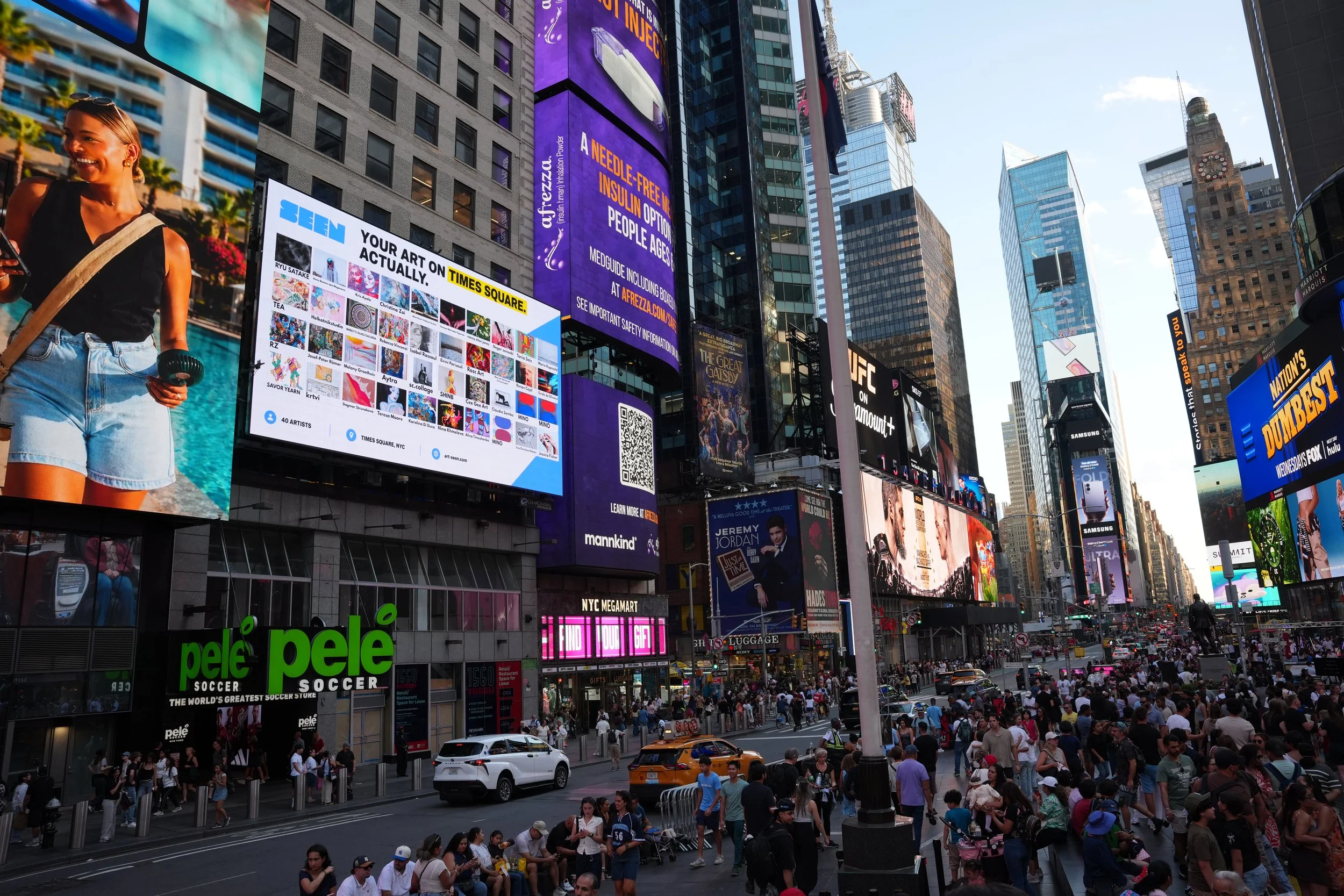
Art Seen on Times Square, New York City — 15 August 2026.
Art Seen is not just about the screen
The screen is only the beginning.
For an artist, being displayed publicly can become part of a wider creative story — something to document, share, add to a portfolio or remember as a moment in your practice.
And because Art Seen works across different cities and showcase formats, an artist can continue exploring new opportunities as they become available.
A shared screen today.
A different city tomorrow.
Perhaps a solo takeover later.
Your practice keeps moving.
Before you apply
Before sending your work, give yourself a few minutes to check the details.
Make sure your artwork meets the required format and is suitable for public display.
Check the deadline.
Check the fee.
Check how many artist places are available.
And most importantly, read the terms for the specific showcase you are applying to.
The details matter because each Art Seen opportunity can be different.
You don't need to make your work into something else to fit the screen.
You simply need to understand where your work is going — and make sure it is ready to arrive there.
Ready to put your work in public?
Your work already exists somewhere.
On your computer.
In your studio.
In a folder you keep returning to.
Maybe it has been seen by a few people.
Maybe it has not been seen enough.
Art Seen offers another possibility:
Put it somewhere unexpected.
Let it meet people who were never looking for it.
And for a moment, let your work become part of the city.
