
Mary Grigoryan
Mary Grigoryan is an Armenian artist based in Hanoi, Vietnam, whose vibrant, multilayered surreal collages explore emotion, perception and the boundaries of the imaginary.
Combining photography, abstract drawing, everyday elements and figures, her work brings chaos and stillness, vulnerability and strength into the same visual space. Inspired by her surroundings and lived experiences, Mary creates immersive works that invite viewers to pause, interpret and find their own meaning within the image.
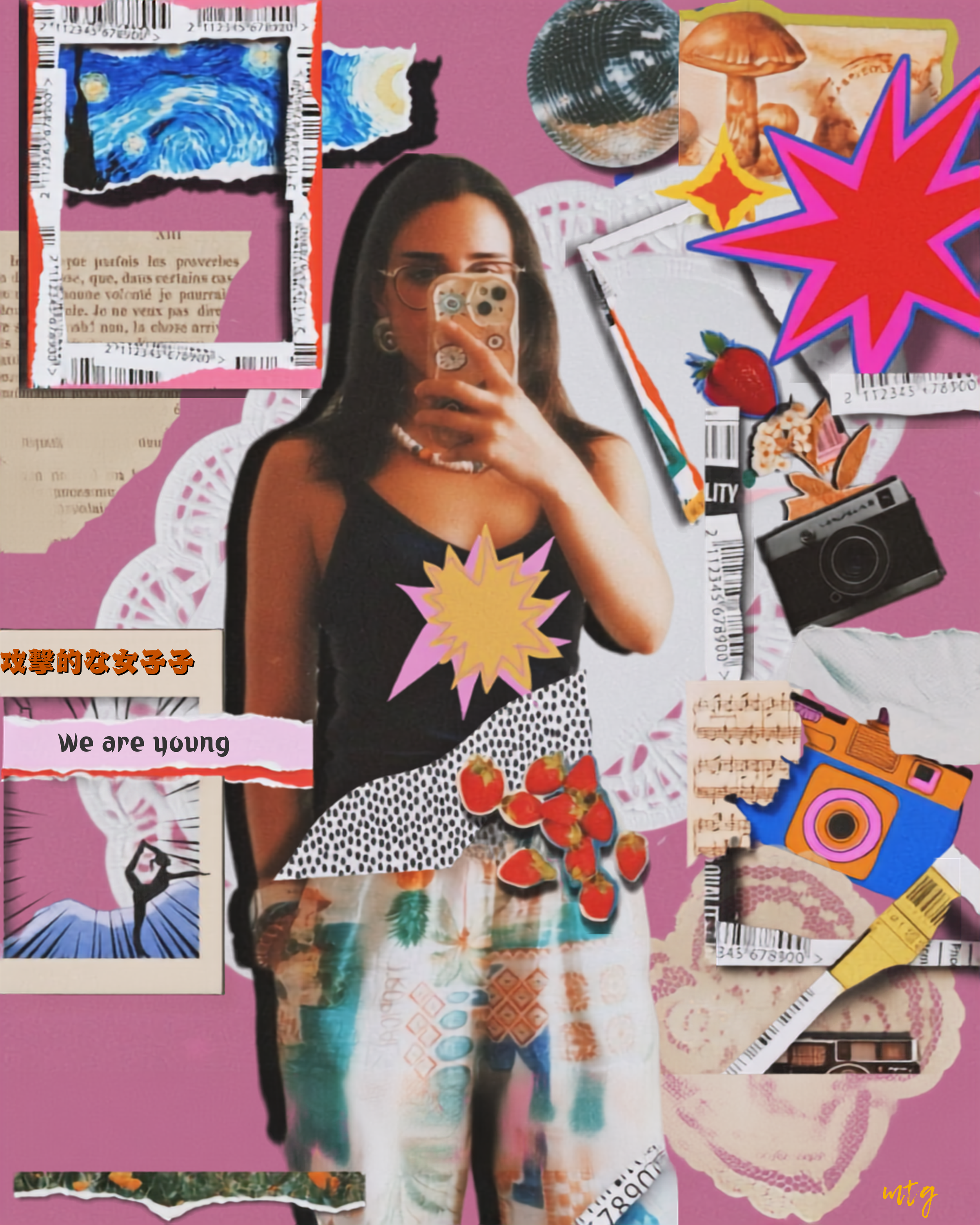
‘‘The storms and hurricanes of my life find their peace on my canvas’’
When you walk around Hanoi, what’s something ordinary that most people walk past, but immediately makes you want to create something?
Hanoi is a gem. There is an abundance of culture and color here, especially when you walk around the Old Quarter. It has so much soul, so much history. It’s honest and open to everyone. The architecture, the style, the narrow streets and alleys, the chaos, the warmth, it’s all in there to experience: it’s not masking anything, it’s real. The people are unique too, the way they drive the motorbikes, the amount and volume of things they carry attached to their bikes, the love they show, their hospitality... This is a very vibrant and unique place to live and create. Hanoi sunsets, sunrises, the moon, the clouds, the sky~ Everything is an inspiration. The lakes we pass every day on our motorbikes, the temples, buildings—old and new—it all puts you in the mood to create. I have had many inspirations from real life: from people to places... this is unique.
If I have to choose one specific thing, it would be the sunset. The sky fills up with the most beautiful colors and clouds... and once I take a picture of it, it’s in my art that evening. It breathes warmth into the picture. The falling rays of the sun—like eyelashes of goddesses in their subtle presence—slowly and gradually fading and dimming the sky in the darkest color of blue. Still present but farther. The whole of nature is inspiration; looking at the sky, thinking about the sky is guidance.
Is there a time of day or a specific environment where your mind naturally slips into a creative state?
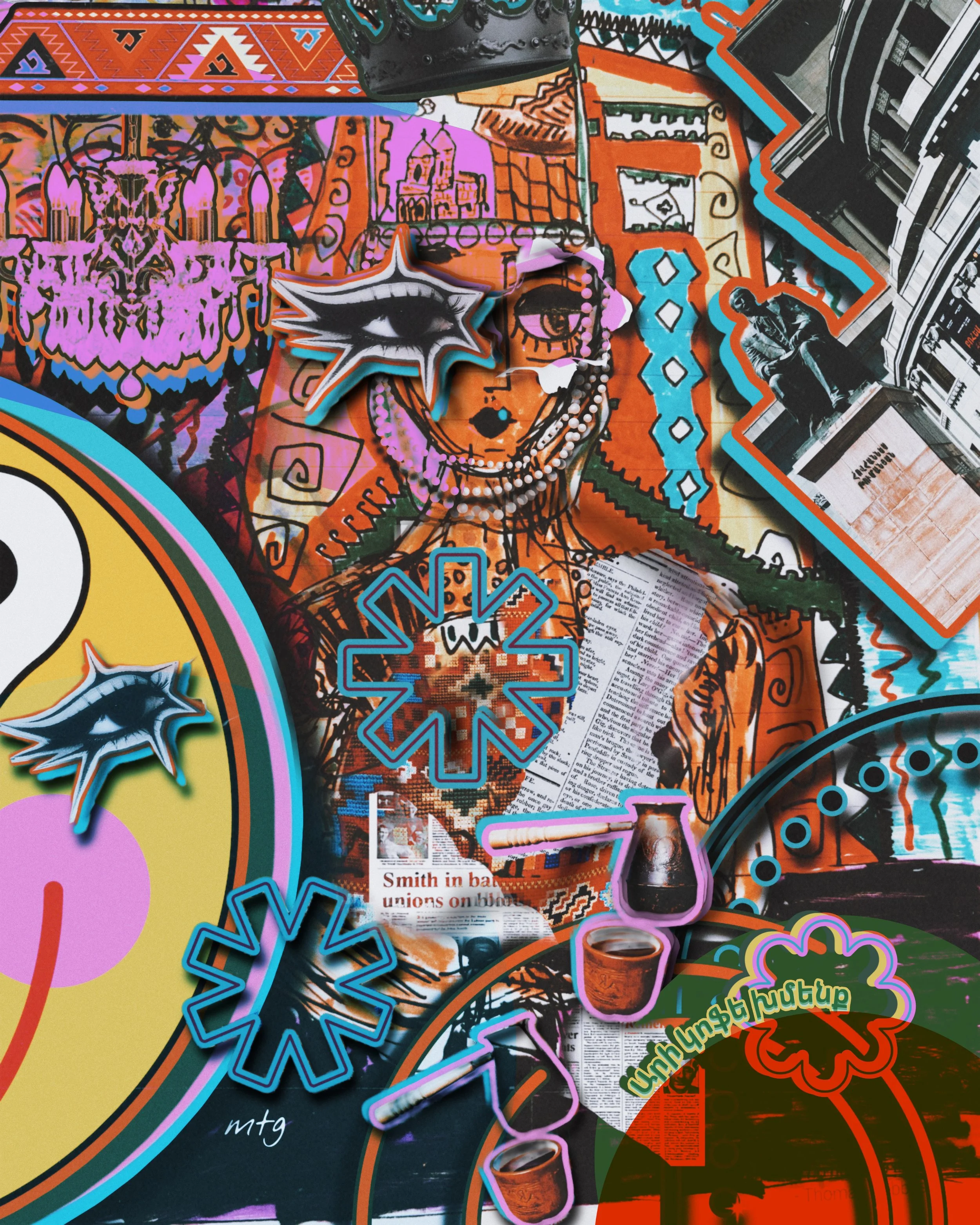
Historically, I get in the mood to create in the evening and at night. The reason is my work schedule. Before, for years, I worked until late, and I would create my artworks after I came home from work. Now, my schedule is more flexible, but my biological clock still puts me into a creation state at around 8pm.
My creation ritual is sitting on my couch or on my beanbag, having some kind of a snack around me—it can be a chocolate chip cookie or popcorn—and, absolutely importantly, playing Rick and Morty in the background as I create. Sometimes I would also do my yoga practice and meditate before creating. And certainly, my very challenging emotions hold a significant weight for me as an artist, thus building a cradle of creativity for me to drift into.
My art has been my peace for a long time, and when heavy emotions pile on, they wander, looking for stillness, for release. My digital canvas always carries those intense feelings, like a giant hug.
I also love group projects, where all the artists gather to create. Now, that’s where the creative consciousness bubble inflates in unity with all visionary energies. That’s a spectacular cloud to hop on and connect in creation.
What is the most frustrating part of your process that no one sees when looking at the final piece?
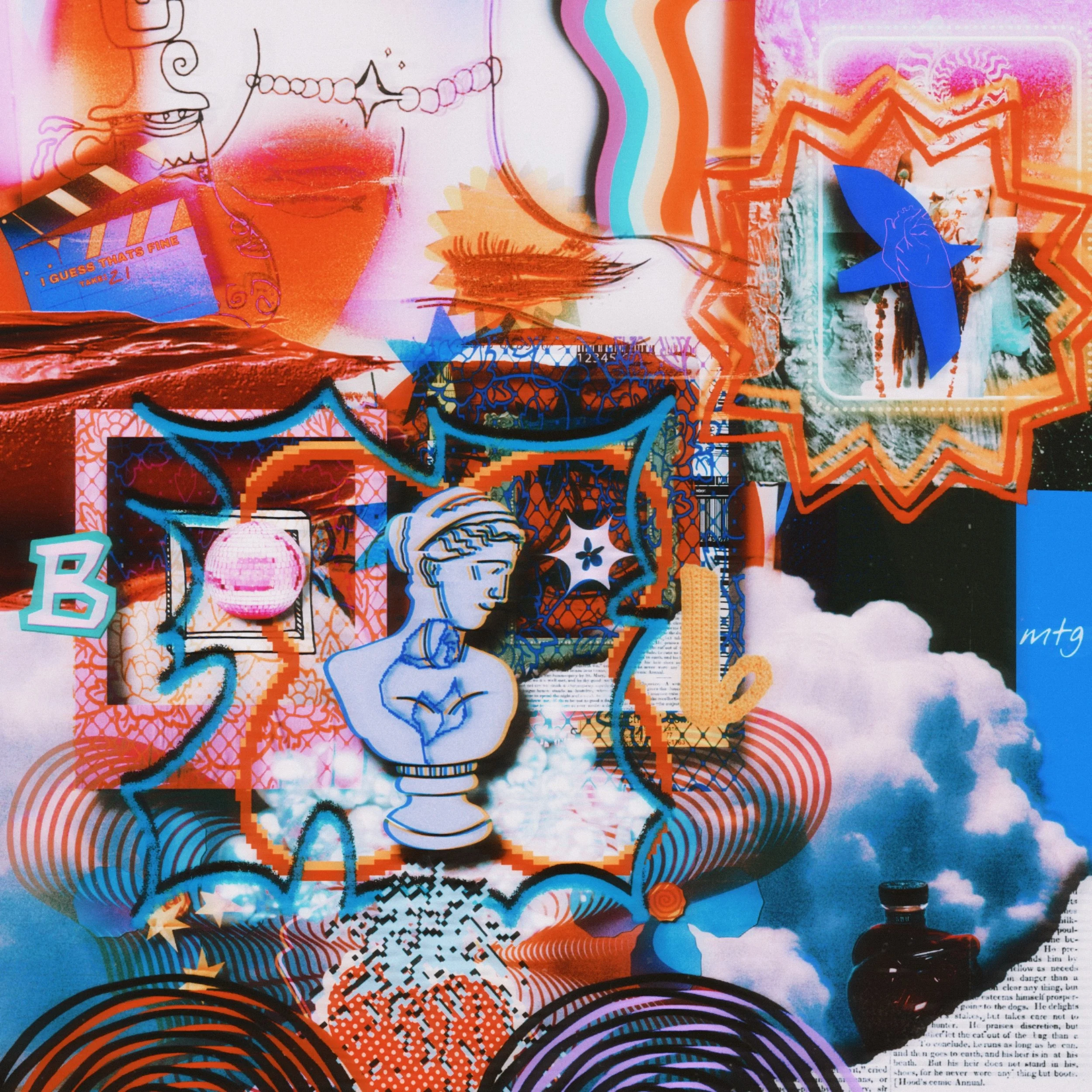
I create my art on my phone. My journey started during COVID, when life grew heavy, challenging my composure and mental capacity. I got stuck in Hanoi in the middle of my vacation, had to figure out life and work... Concurrently, there was a war brewing in my country with the neighboring powers; a consequence and legacy of dictators. Being far from home and witnessing such atrocities is trying. Add that to personal turmoil pertaining to the quality of life in the COVID world... my life was heading in an unexplored direction, with unfamiliar emotional currents rising—a condensation of untested feelings. The storm was inevitable. The charge was too substantial. It had to pour. And it did.
I only had my phone then, and as an extension of my arms, it was the tool of creation, the circuit to safely process this emotional charge, the rage, the despair, the hurt, the ugly. And how beautiful was the expression of “ugly”... just reminds you that hardships exist in their own right and they are the way they’re supposed to be. Nothing is wrong there; it’s all part of the plan, the reality of living.
There are, certainly, frustrations that come with using a phone to make art. Mostly technical ones. As I work several hours on my device, it overheats, freezes and restarts. The shutdown results in a complete loss of all that I created. I learned to save every step of it to avoid losing multiple hours of uninterrupted work.
Another hardship is that once I finish and complete the artwork, it’s done. Going back and fixing it would mean having to create it over again. So, before I start my commissions, I discuss the work in detail with my customers to avoid any future inconveniences.
How has your relationship with your own art changed from when you first started making it to today?
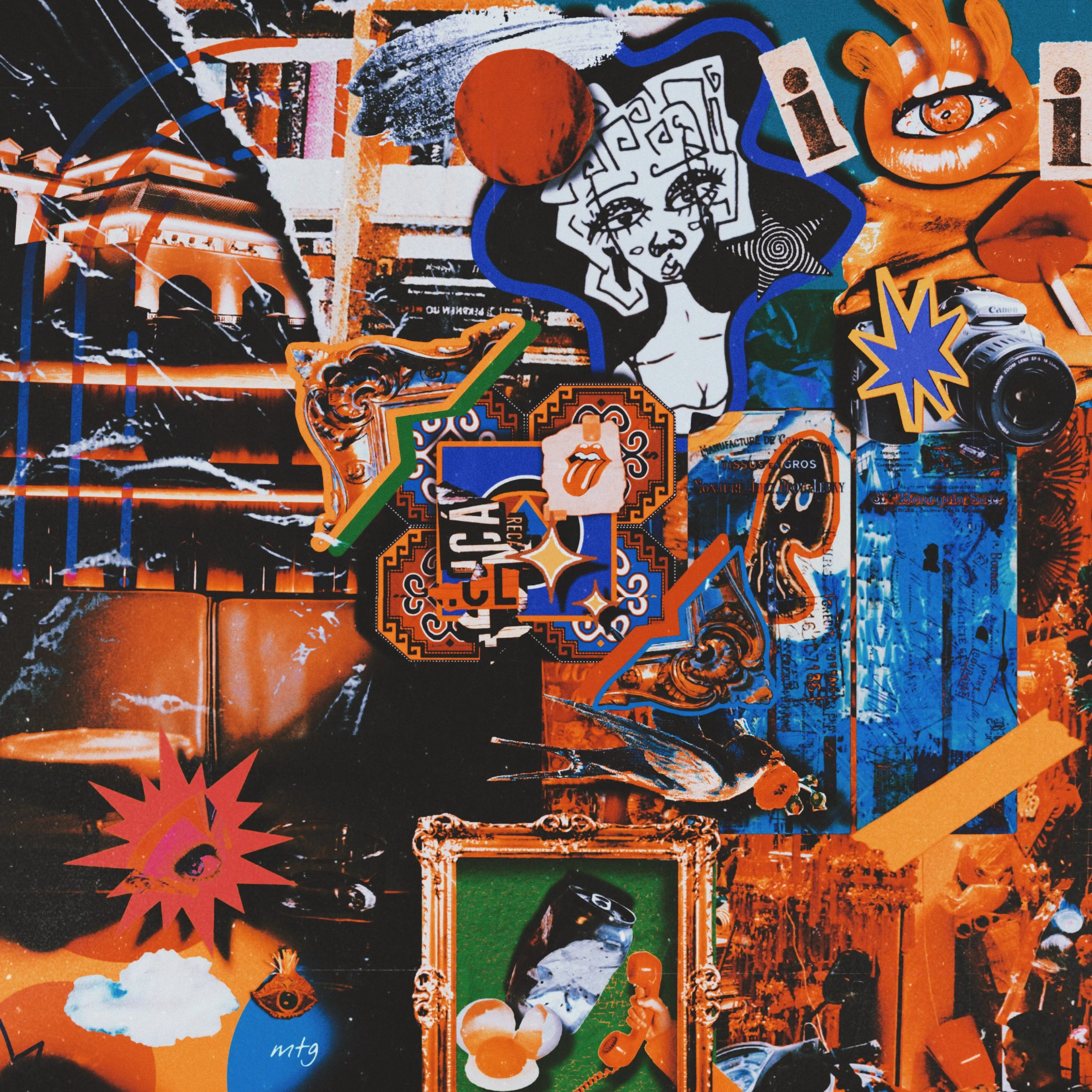
I think my art was a lifeline back when I started. There was a lot of hurt and unexpressed feelings, a lot of negativity, heavy energy. Compared to the current day-to-day, I would say creating is like an indulgence. It’s exciting to start something when I have no idea about the final outcome. The unexpected combinations, the experiments, the extremes.
The feeling you sit in as you create is always different. Every day, the artwork mirrors a different emotion, a different view in a prism.
Recently, I organized an art journaling workshop, where people select one of my artworks with which they emotionally connect, and they journal about it. I want them to go into the artwork, explore, ask questions, look around in deep reflection, and journal whatever they feel like they need to let out. They can also write a poem about it, create a story, or draw something inspired by it.
I also participated in this activity, and I chose an artwork which I created years ago. In 2022, when I made it, I associated it with danger, loss, panic, darkness. And now, when I picked it up, I felt lightness, I felt hope and permanence. I journaled only positivity, healing.
In a similar way, my art has changed. Transformed, as a reflection of my energy. I guess before, it was like a crutch, and now it is an inspiration.
If you could experiment with a completely new medium or technique tomorrow without worrying about the result, what would you try?
Right now, I’m thinking how much I would love to do film, animation, fabric collage for designing clothes, sculpture, calligraphy, printmaking... and probably many more. I have visions of creating sketches, thoughts about a creative video shoot and mini-films. I love that in this hypothetical situation I don’t have to worry, because the “worrying” would have shrunk this into a single safe answer.
I am generally open to new experiences and new knowledge. I love to learn, and everything I cultivate is bound to enrich and extend the boundaries of my art. I imagine creating a film layered with the same emotional textures as my collages. Except here, it all comes to life. The philosophy is communicated through breathing images and circumstances. I picture my film carrying surrealistic fragments, the same way my art does; fish swimming in the sky, a waterfall overflowing the cup, people existing in the same space as different energies and expressions, flying elephants, etc... My film would be so deep and profound, unlocking unknown and unexplored awareness and thoughts.
I come from the same country as one of the greatest artists of all time—Sergei Parajanov. I had the privilege of visiting his museum in Yerevan, Armenia. All the art, including his film The Color of Pomegranates, is an immeasurable inspiration, perfectly matching my art style and my vision.
Talking about my most current vision, right now my mind is occupied with visions of using my art in designing clothing. I am thinking about clothes that make women feel free in their skin. Clothes that are light, creative, colorful, soulful and bring happy energy to the room. I’m thinking of a mixture of cultures, times, and genders. Of course, making sure to properly credit the inspiration sources.
I’m also admiring how, in Vietnam, people wear their traditional áo dàis very regularly; they wear them around the city, during special events, parades, parties, etc... I adore it. This makes me think about Armenian traditional dresses and, concurrently, it saddens me that we don’t have a similar culture around wearing them in our daily life.
The Armenian taraz—“տարազ”—is also very beautiful, with breathtaking art, embroidery, traditional patterns, history, etc... I have been pondering the importance of this practice at home too. As I travel around the world, I see that in many countries this trend holds true; people wear their national garments regularly, in their daily life, whereas in Armenia, traditional clothing is so expensive and thus exclusive to only a select few.
I would love to grow and nurture a community where we can wear our “Taraz - Տարազ” around the streets, during our daily lives. This naturally weaves me into another art form I’d cherish learning—Armenian embroidery. I can incorporate that skill into my clothing and design. Traditional clothes should be affordable and exist as an inseparable thread woven into the culture and daily practices.
When you look back at your very early work, what goes through your mind?
When I look back at my earlier work, I’m thinking, “I wonder what was going through my mind.” I’m happy that I started creating, and grateful for keeping it up even when it got hard. My early works are the spark and the fuel for my continuous progression.
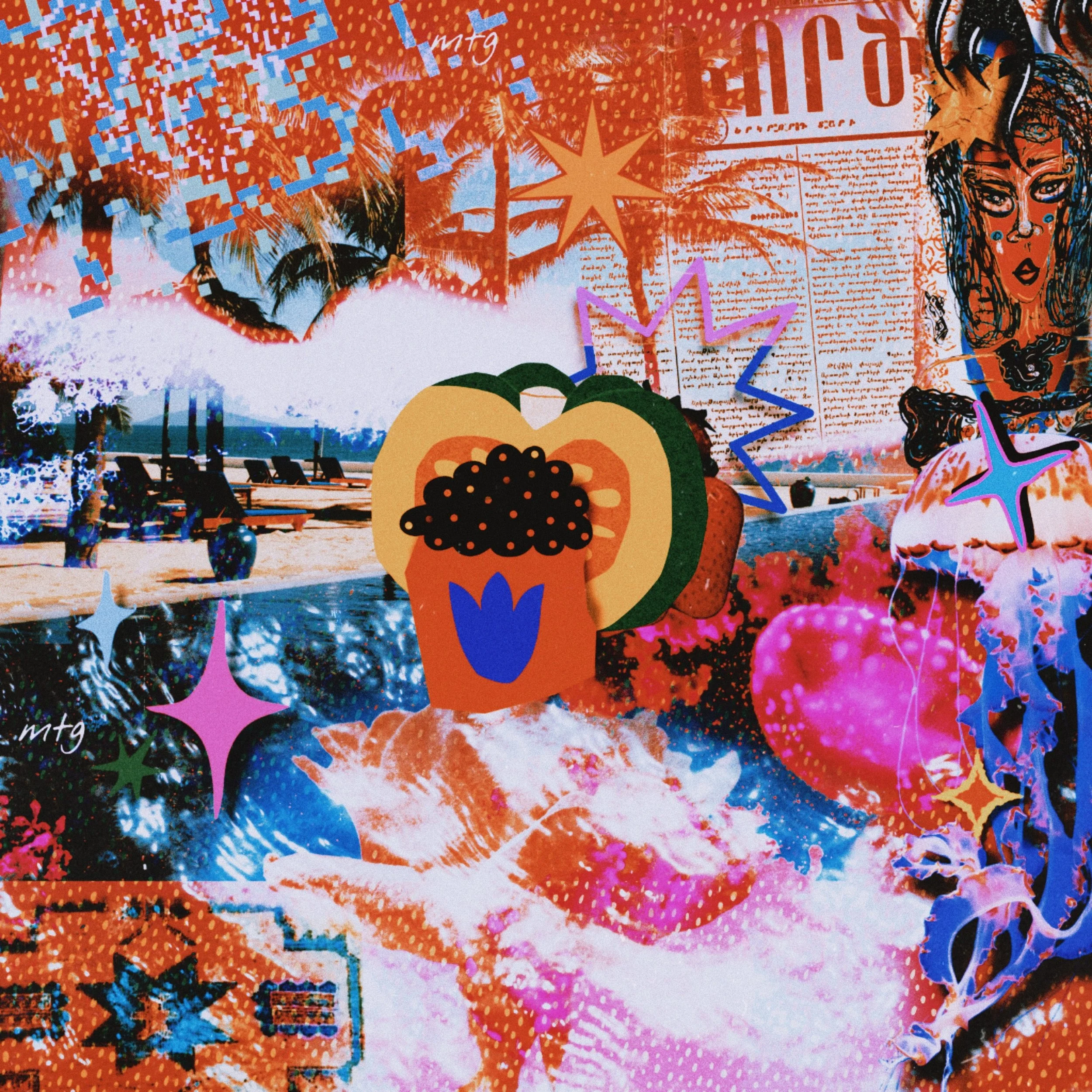
My first collages have such different energy. I feel like they’re floating, moving... I’m imagining that they have places to be, messages to deliver. They have a “fighter” energy, a little aggressive and intensely dreamy. I would also say that they are raw, experimental, because at the core, I was guided by instinct and intuition.
In the beginning, the recipe was simple: blank page + color + stickers. The meaning grew from the process, as I looked at the stickers, at the “canvas”, I’d come up with ideas, with substance. Oddly, I was free in my creation, however burdened my chaos felt at the time. If I looked at my art days after initially creating it, I could literally translate them into events that happened in my life... realizing how, on a subconscious level, my mind was disposing of my negative emotions.
My purpose is always to be true to myself and to portray my very real emotions. When I look through my portfolio, I’m always awed by all the changes in my style. I feel like they come in periods. It’s like a cluster of artworks stretching under a long breath, then a new style comes with a new breath. Change is good, you know? I am happy that I keep “breathing” and evolving my style.
I would say in the beginning I couldn’t really understand the quality of the photos I was using for my art. I didn’t know the “rules” of the collage. “Can I use other people’s art?” I had no idea. So when I started posting on social media, I went on to read the unwritten rules of collage art, to do my thing as respectfully as possible.
My earlier collages translate a lot of meaning, but I could see the growth from simple first works to more sophisticated and intense art. I sometimes want to just create the same way I did in the very beginning. I am very happy with my first “breath” of work but not happy with the second one. I was experimenting with new styles that I saw online and maybe lost my individuality a little there. But those experiments helped me form my signature style, and plus, experiments prompt growth.
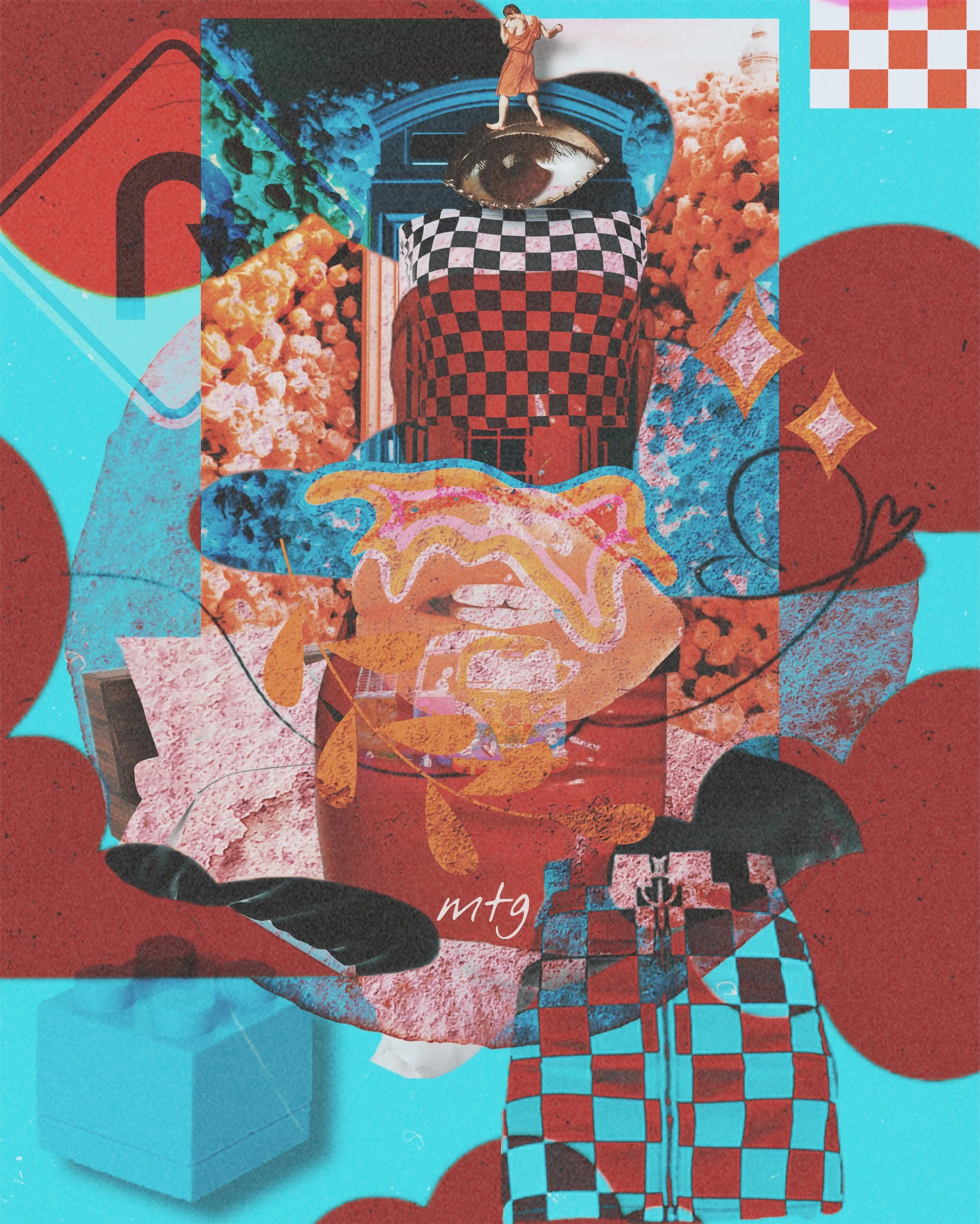
These are my subconscious interpretations of life, through aesthetic exploration of reality.
When someone looks at your collages for the first time, what do you hope they see?
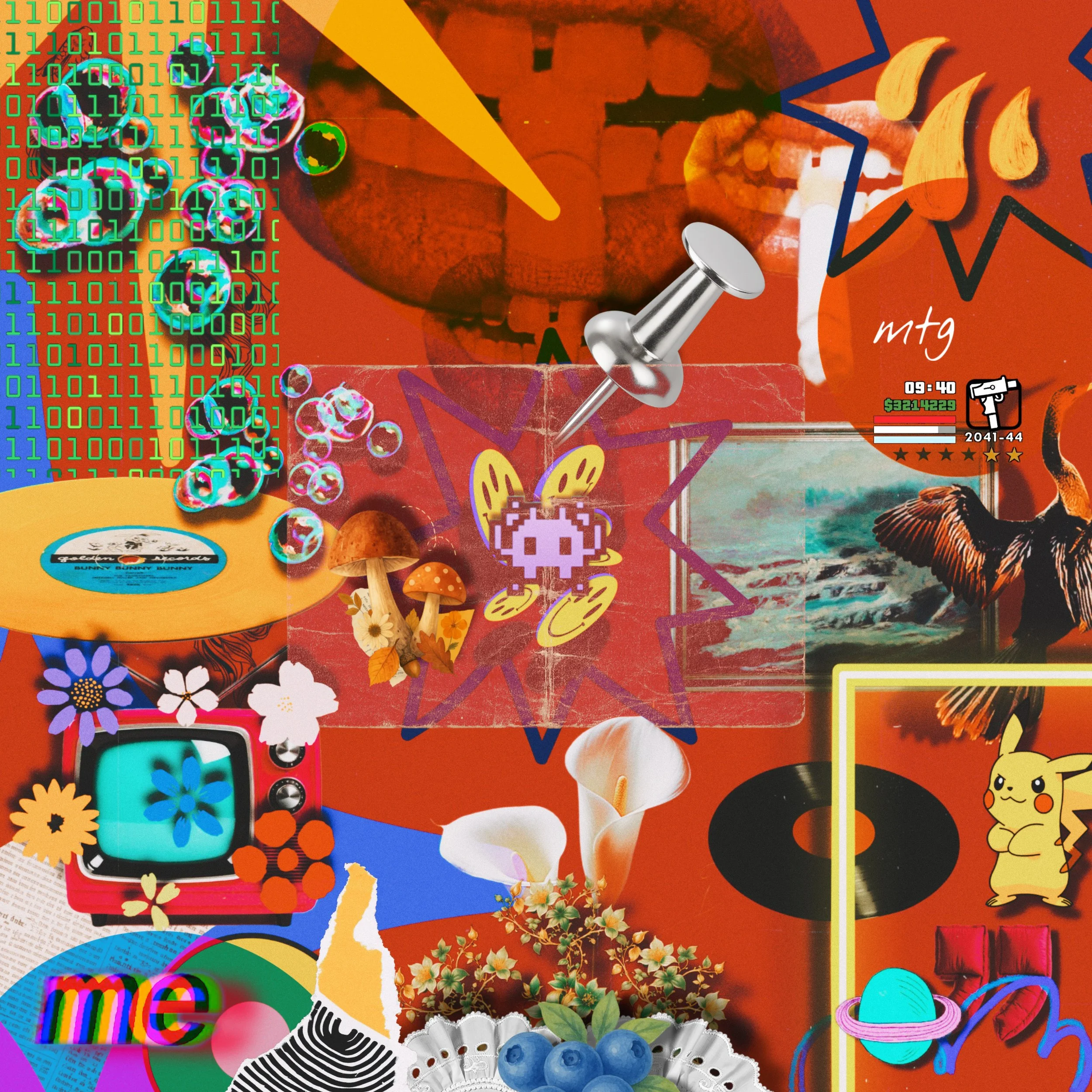
I know when people look at my collages, they see a blast of colors and expressions “from the jump”.
I think first, they feel “it”—the artwork—but that first glance is not translucent. People don’t see what I meant for them to see yet. I think they understand it holds significance and meaning, but they don’t know what “it” is: not yet! So, considering my style, I’m sure people can’t dive into it right away.
First, it will strike in layers: starting with the colors, then the texture... from underneath the texture, they’ll drift into the deep, where figures and symbols are emerging from beneath, asking questions, building bridges for spectators to cross. People will stare for a long time, interpreting it. They’ll cross to the other side, and I love that they do. Then, they’ll read the writing that’s paired with the artwork.
The final step would be approaching me and asking what “it” means to me, or if they can discuss this art with me. I believe all of these are resolute steps toward the edge of the turbulence of the ocean: before they dive into the depth of the sea (see), the vision, the flow, before emerging to the surface to find their reflection mirroring in the image.
Because at the end of the day, the art is the introspection of “you”. “You” and I will see the same element in a different capacity, carrying different emotional gravity. Same light, but different prism, same symbol—opposing meanings.
Most importantly, I want people to give it a chance, and not view it as a color/texture mess.
“Pause... linger, submerge into the symbolism, ask questions, open yourselves up to exploring your imagination, then let the images strike first and speak to you. Have the conversation, take your time to come out from the waters in peace, quenched and assuaged.”
How do you describe your style when you're just chatting with another creative?
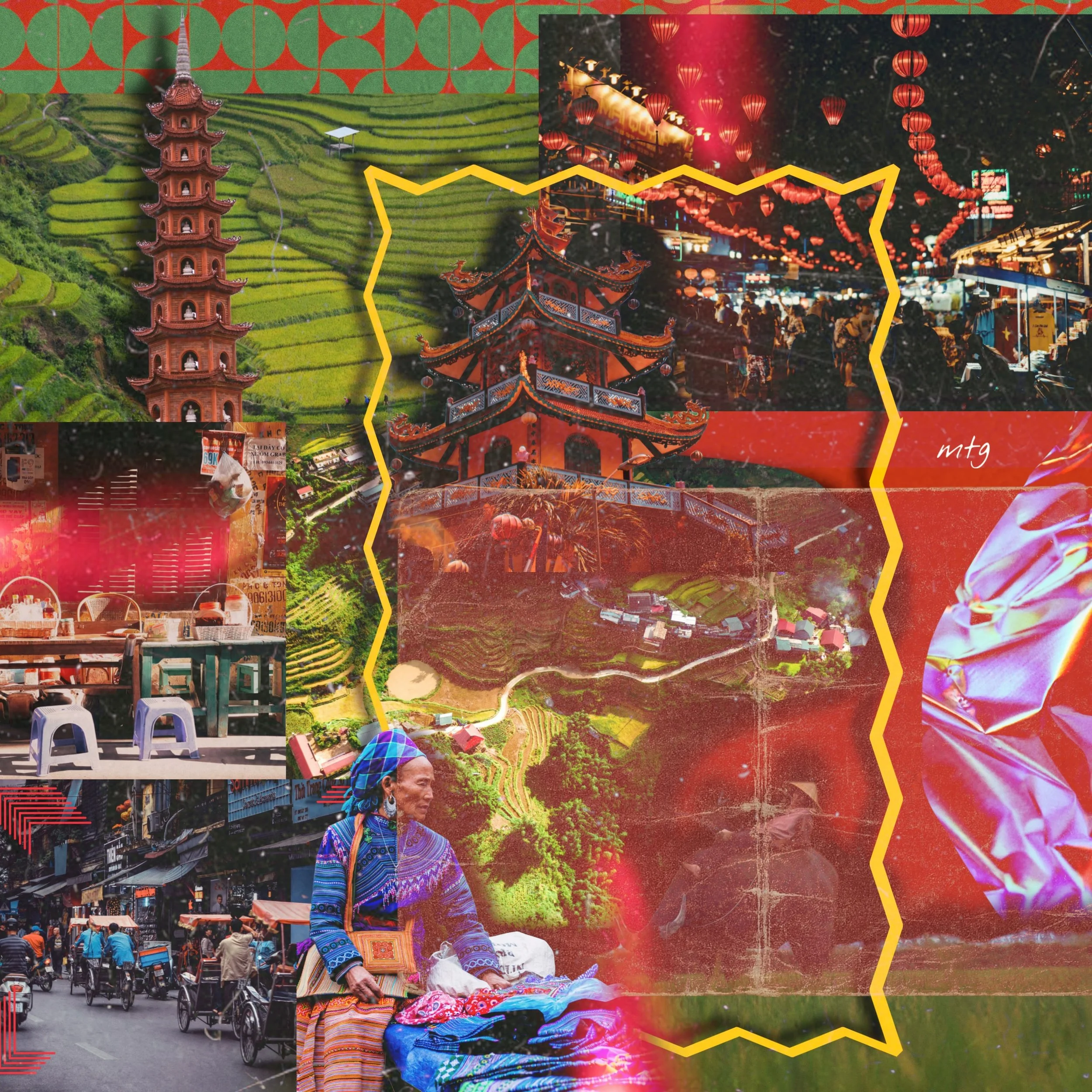
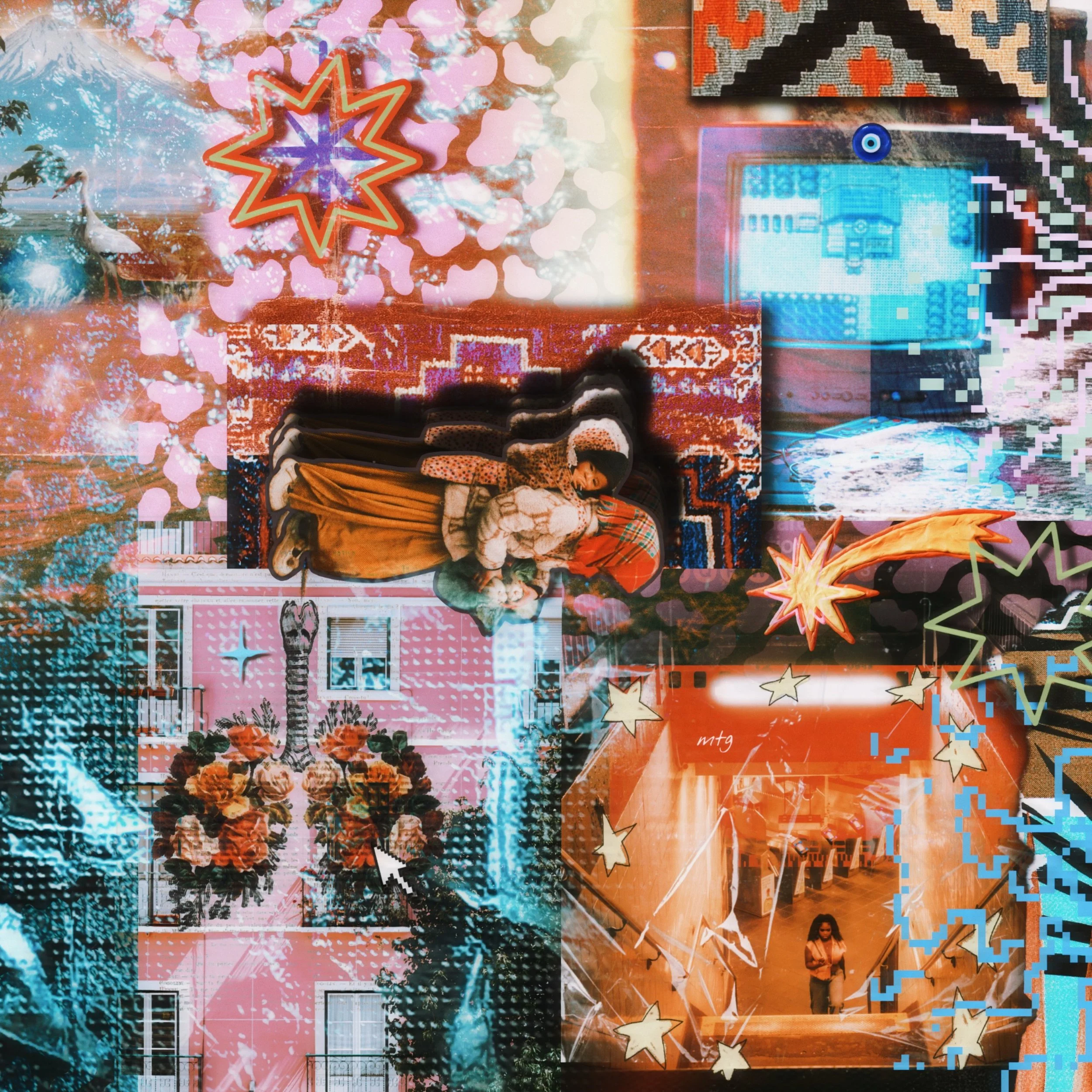
My style can be described as a digital surrealist mixed media collage. I use my drawings, my paintings, my photography, some stickers and images from public domain websites to create an atmosphere of abundance and expression. It’s the symphony of my soul.
I always speak about the emotional weight the collage carries and how it seems like the storms and hurricanes of my life find their peace on my “canvas”. They can exist there freely, in stillness, devoid of the movement of my overworked and stressed brain.
When I look at my canvas, I see so much movement in stillness. It’s singing, it’s dancing or performing. Sometimes it’s just awkwardly staring at the viewer, and in order to get past it, we need to understand it first.
And sometimes my art is searching for something, so you cannot catch its glance directly: I don’t know, maybe try to find what it’s searching for. How we navigate the chaos is up to us. It’s our adventure.
How do you know when a project is finished versus when you’re just tired of working on it?
I don’t know... is any project ever fully finished? I feel like art, similar to a conversation, can go on and on: modify, transform, start over... as long as words exist, thoughts exist, and ideas exist, the dialogue can carry on. Art, in a sense, is a dialogue, a forever-stretching conversation. You can add more to it, and at some point the focus will shift... evolve? Many things can happen to the discourse depending on who enters the chat. For me, personally, this happens naturally, instinctively, intuitively, as an extension of my art, similar to my creating process. My collages contain forty to one hundred elements—stretching from photography to design to symbols, shapes, textures, paintings, drawings, and special effects. All of these are navigated by my feeling of “more” or “enough”. Sometimes I’d have only five pictures, and instinctively, I’ll feel like that’s all that I need for this conversation: that sometimes less is enough. If I feel tired of working on my art, I will come back to it the next day to tend to it, and unless my gut tells me that’s enough, I’ll keep “watering” it.
My conversation doesn’t end because I’m tired of it—it ends when there’s nothing left to say.
What’s an idea you’ve been sitting on that you haven't had the time or courage to try yet?
As an artist, my purpose is to trust my instincts and my soul. If I happen to think of an idea, I’d write it down to work toward it. It all comes to one thing: self-expression. Notions I explore aren’t chasing empty bubbles, as all of them have a meaning. It’s self-exploration through knitting an elaborate artistic expression, where emotion sits at the core, maturing into a visual theater. A play where people can encounter a myriad of independent dialogues around fashion, art, trade, literature, drama, meditation. And some of the ideas you will read below come full circle with self-expression and healing.
Now, the thought that occupies my mind the most is incorporating Armenian elements into my collages more often. I want to make semi-traditional clothing using my art and blending them with Armenian patterns.
I am also thinking of sending my merchandise to art shops for sale. These include t-shirts, tote bags, silk scarves, posters, postcards, magnets, and notebooks. My t-shirts are limited in number for each artwork, and the silk scarves are very exclusive—1/1.
I have also been considering messaging art shops and galleries about exhibiting my works in their venues.
I have thoughts of creating a story using my collages. Something like an art album, the way singers do. I want to pair my art with my writings, stories, and poetry.
I am thinking of organizing more journaling workshops to inspire honest emotional expression through collage and writing.
This is an experience where people are experimenting with digital collage and journaling. They will start by choosing from my pre-made templates on Canva. Each template has a different energy and message, such as “The versions of me nobody sees”, “A younger me would be surprised that...”, “Colors of my personality”, etc. Then they use the images I prepared for them to create a collage. They will choose the pictures that resonate with them, their vision, their aspirations, or emotions.
Step one: they create a digital collage. Step two: they choose one of my art posters, whichever one feels more personal, more inviting. Then, they journal their feelings. This is a safe space to explore personal emotions through art. I encourage them to be free in their expression, visually submerge into the artwork, and explore the depth of their emotions. What stands out for them? Which elements make them feel seen or uncomfortable? Why is that? Would they like to change anything, or move things around, organize it differently? They also can choose to write a story about the art or a poem. They are free to express themselves with drawing or note-taking. The participants will have as much time as they need to freely and safely compose. At the end of the workshop, they can take the art poster with them as a gift. Another souvenir from me will come a month later. I will use the pictures they chose for their Canva collage to make a personalized mtg collage specifically for them.
After my journaling workshops, I have received so much love and encouragement. People told me how much it helped them and how they came to the workshop with negative or depressed feelings and left in brightness and positivity.
These are just some of the ideas that I’ve been entertaining lately. I have more creative thoughts manifesting into my reality. At the moment, I want to honor the few that I mentioned above, and I want to build this as a foundation for prospectively taller and more artistically bold construction in the future.
Discover more: Instagram
