Ryu Satake operates at the intersection of contemporary art and architecture, redefining the relationship between the viewer, the image, and the environment. His practice is grounded in a foundational mantra: “Space is power. Black is structure.” Drawing on his background as an architectural designer, Satake does not treat his works as isolated objects or mere representations. Instead, he conceives them as spatial conditions that envelop the viewer and extend beyond their physical boundaries. His work investigates the movement of space itself, transforming the visual field into a site of architectural and perceptual exploration.

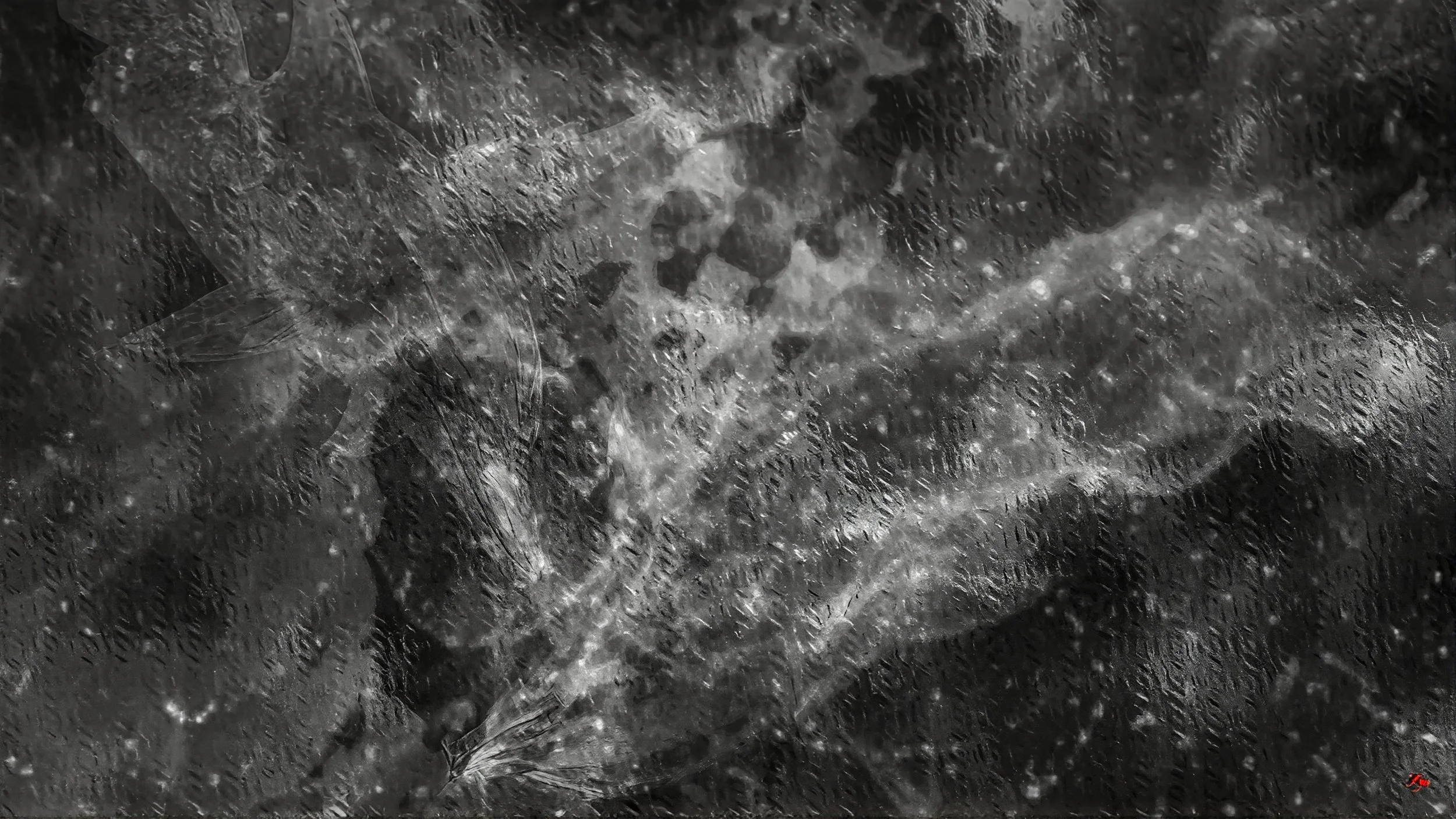
In Satake’s universe, black is not an absence of color but a structural field. Within this darkness, he explores the dissolution of contours, creating states in which boundaries lose their certainty without disappearing completely. This structural void becomes a medium through which fragments of light, fluid forms, and spatial rhythms generate tension and depth. By withholding visual certainty, Satake invites the viewer to confront a presence that cannot be easily named or fixed, as the distinction between image and space gradually dissolves.
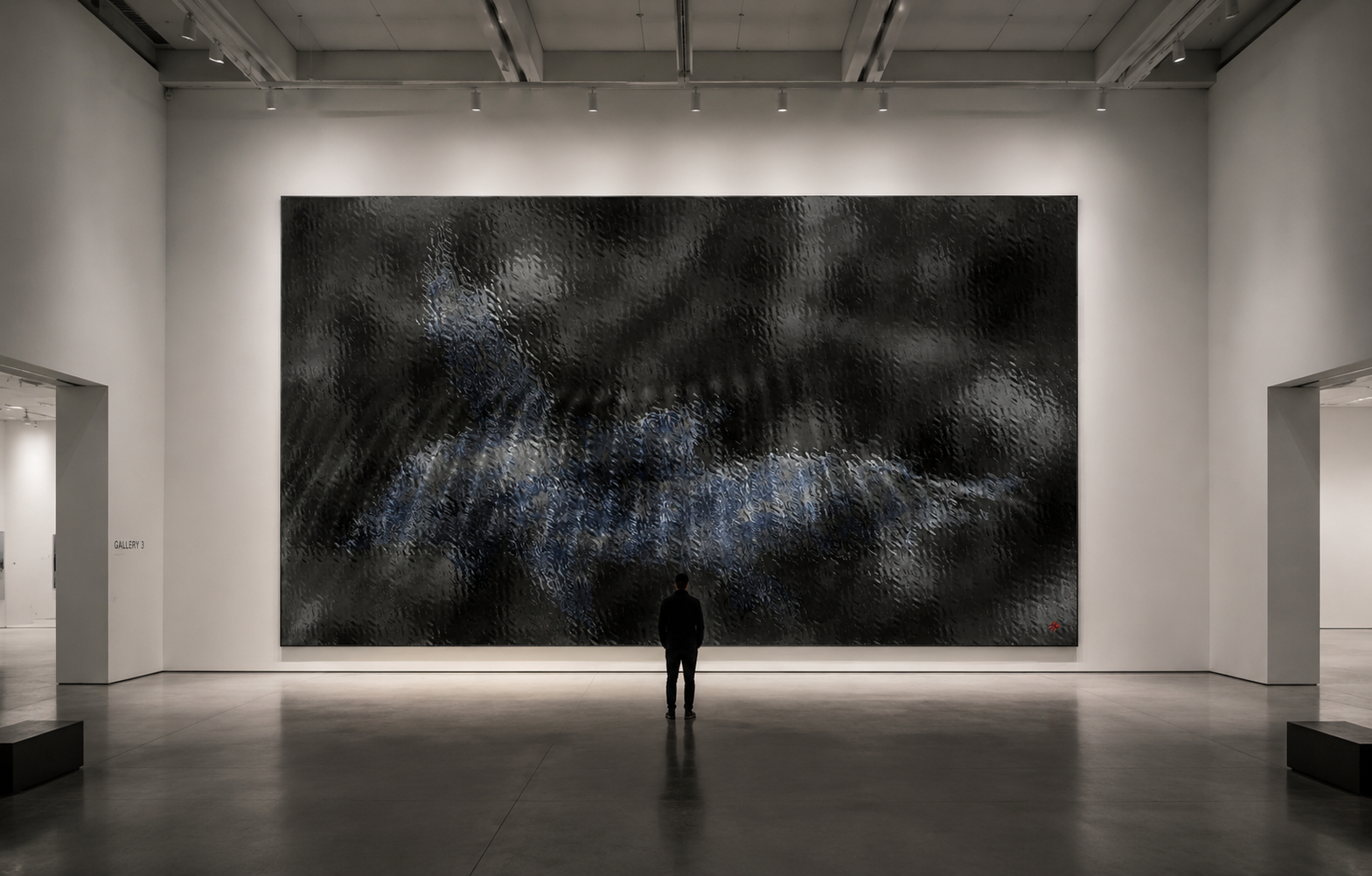
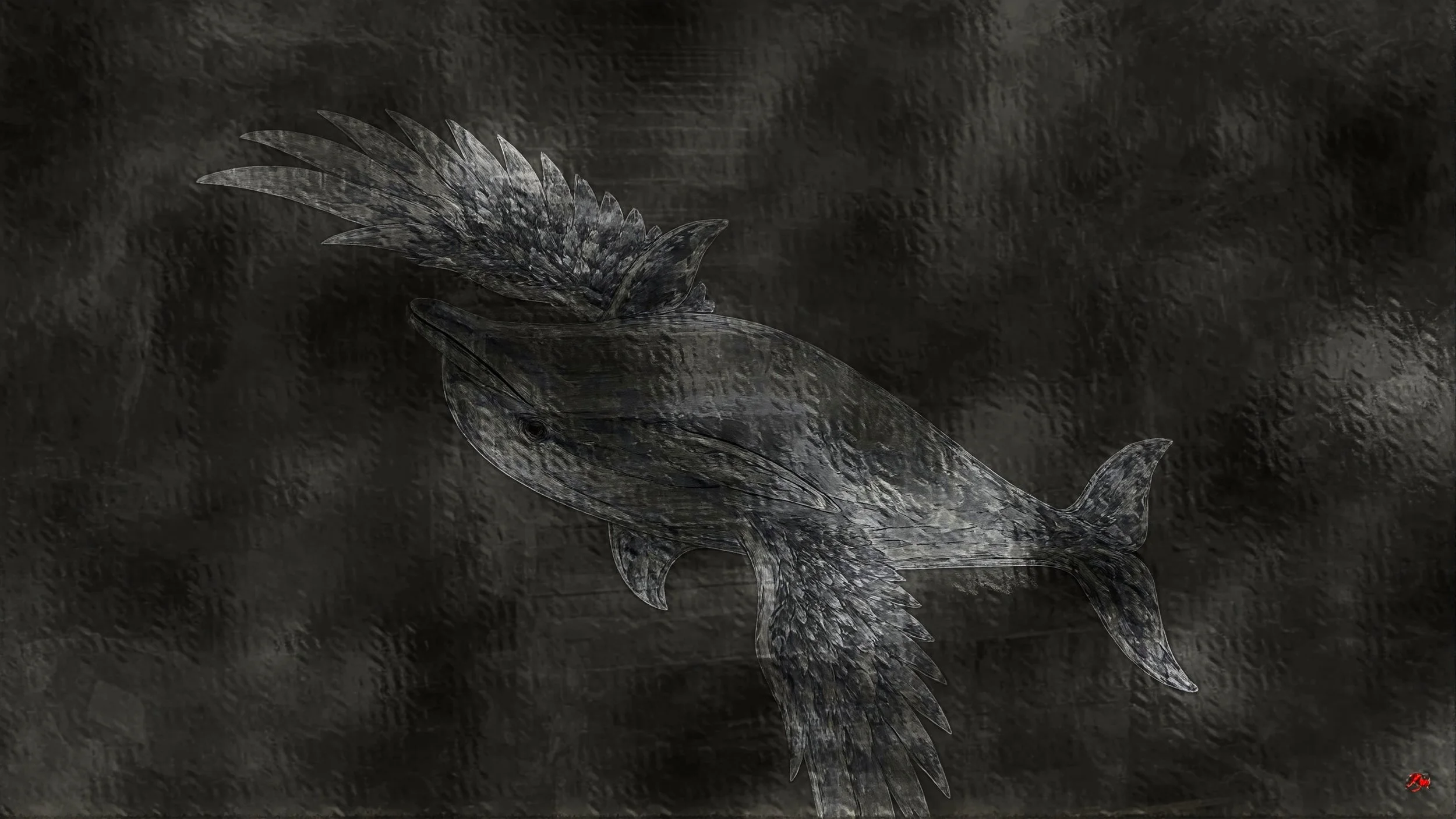
A central theme in his practice is the idea of presence between emergence and afterimage, in which forms are captured in a state of perpetual transformation. Works such as Pulse of the Abyss, Crystal Cetacean, and Dual Existence explore the threshold at which an unseen presence begins to reveal itself without ever settling into a fixed image. This creates a shifting balance between clarity and ambiguity, where becoming is more significant than being. The viewer is invited to participate in this unstable field of perception, completing what remains only partially visible.

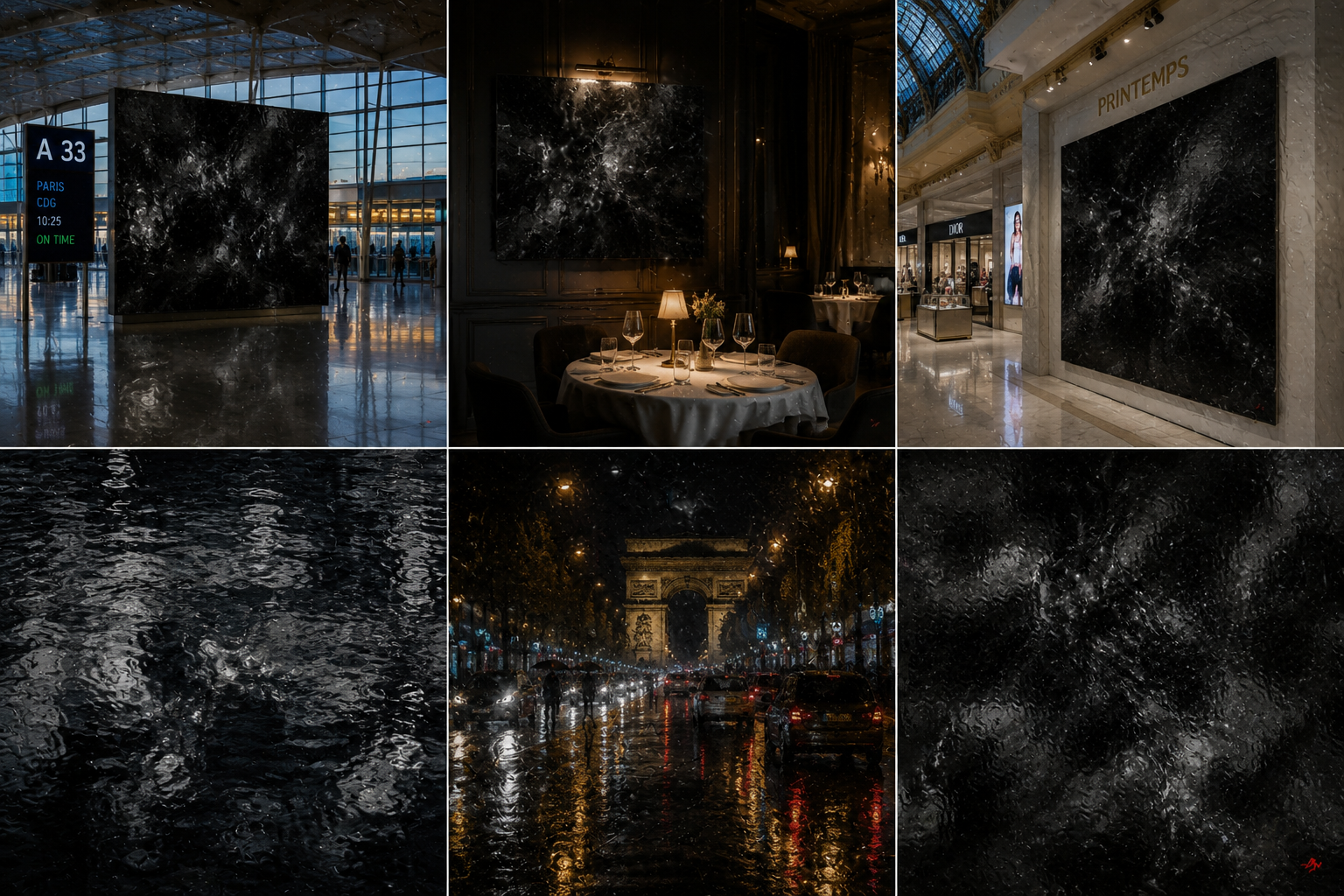
The scale of Satake’s work is inherently architectural, often expanding to occupy entire lobby walls or public environments. At this scale, dissolving contours no longer belong to a single surface ; they begin to alter the perception of the environment that contains them. Whether through crystalline forms or luminous trajectories cutting through the void, the work functions as a spatial interference. It generates a quiet tension—almost a monument of silence—inviting contemplation and stillness within an increasingly complex world.

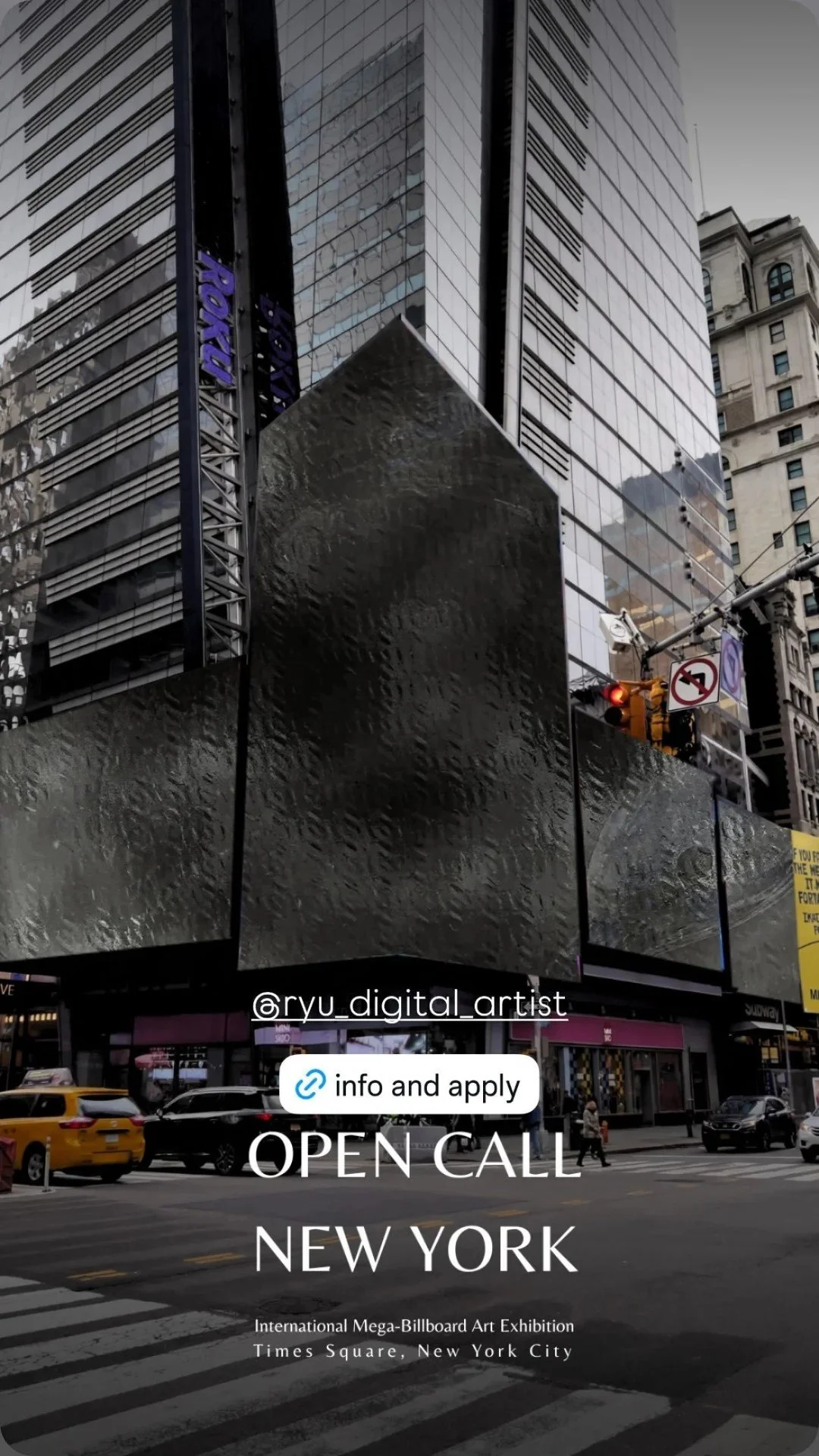
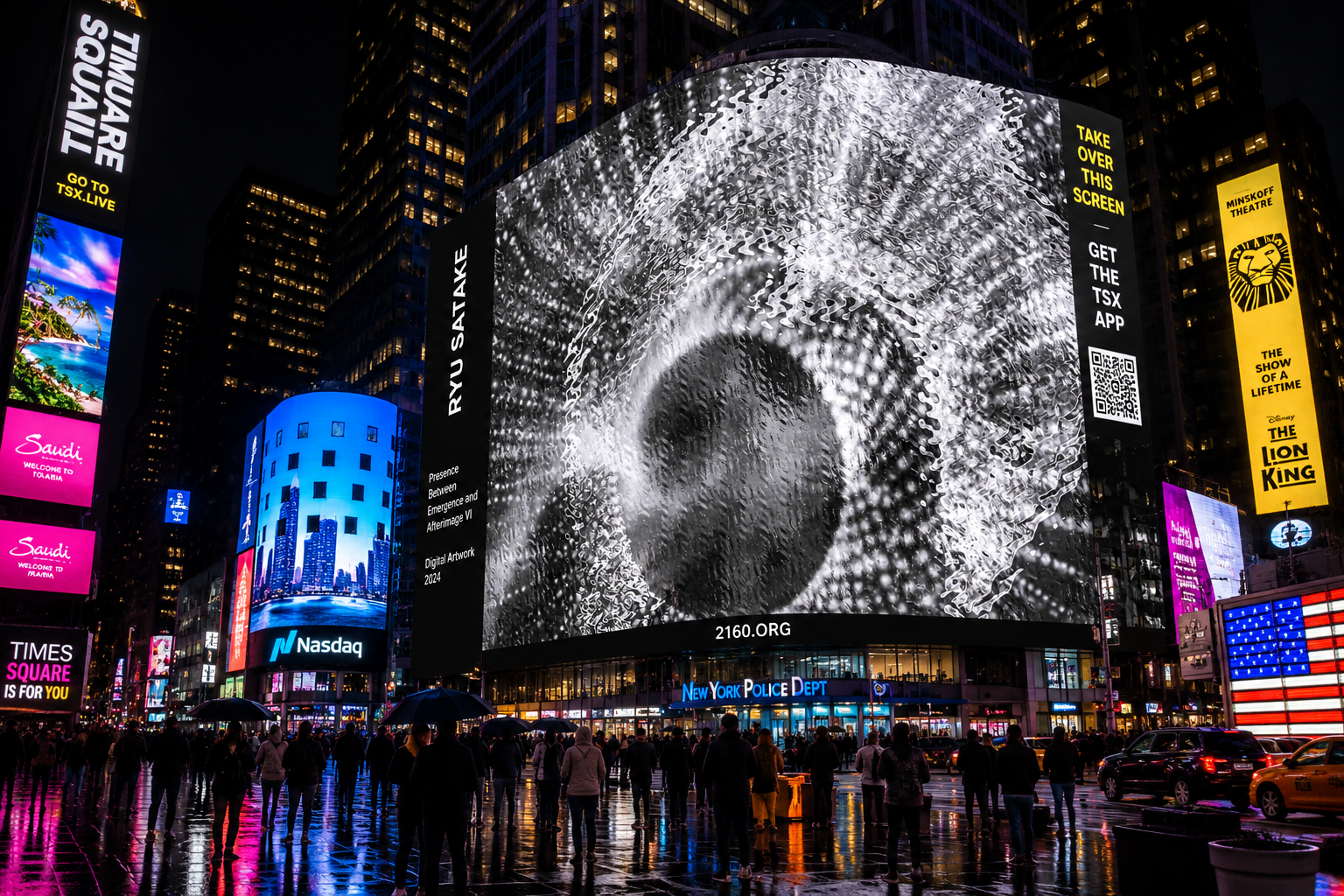
Satake’s practice also extends conceptually into the urban landscape, where projected interventions disrupt everyday perception. In his visualization of Times Square, dissolving contours spread across multiple architectural surfaces, creating a temporary disturbance within the city’s light and movement. Presence is no longer contained within a screen or frame ; it occupies the space between architecture and the collective field of perception. Even after the image dissolves, a residual presence remains, continuing to resonate within the void.