
Michael Hanna
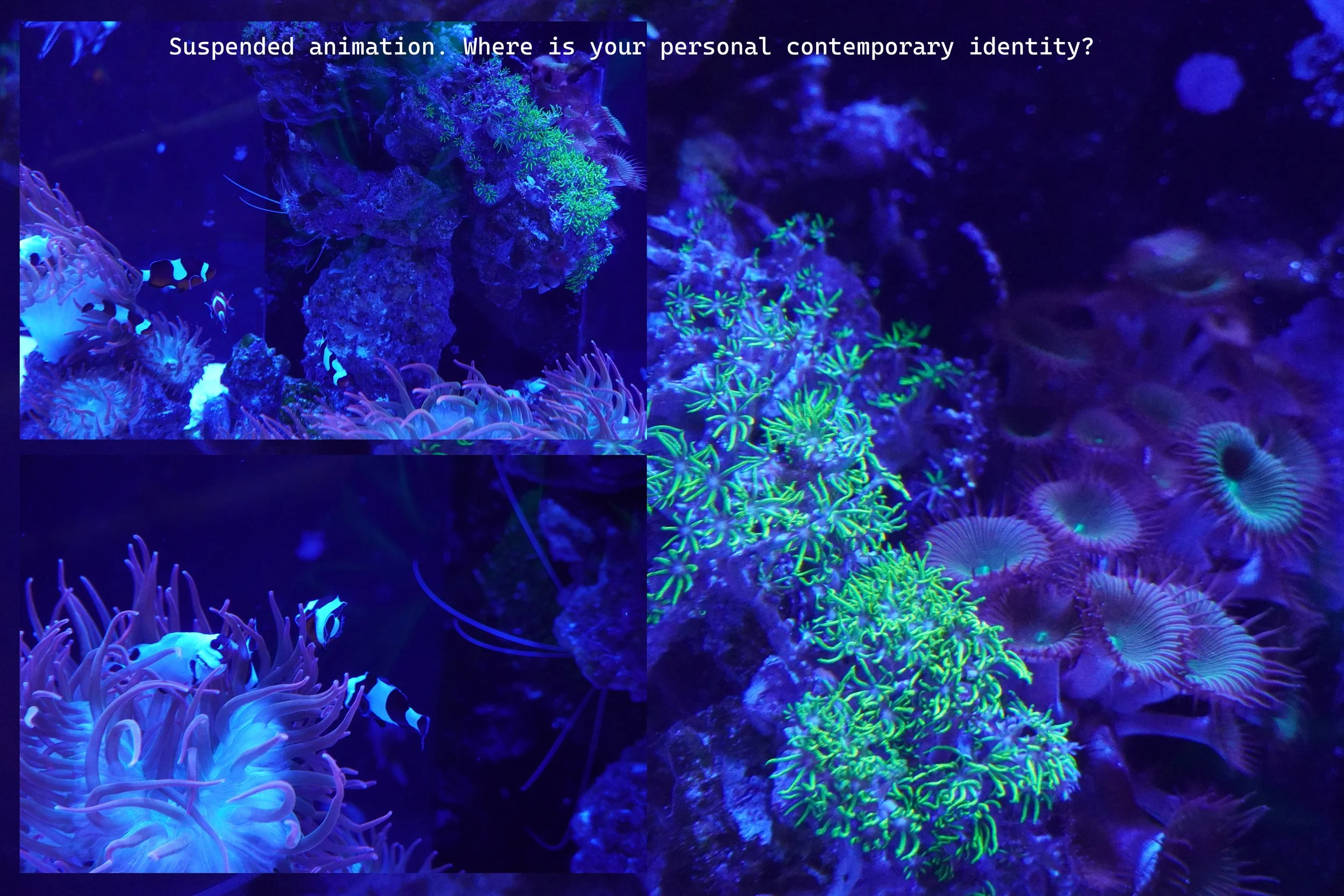
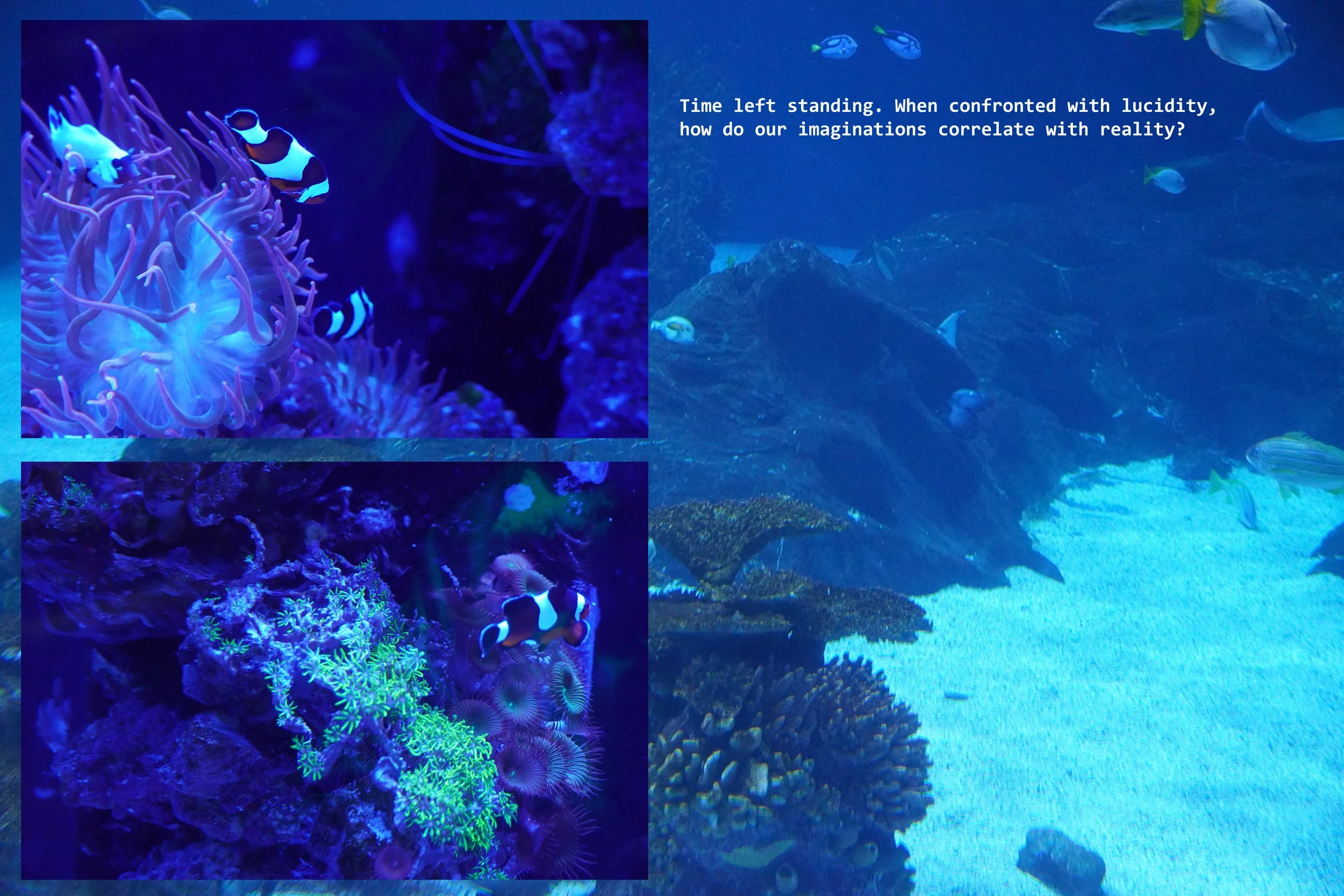
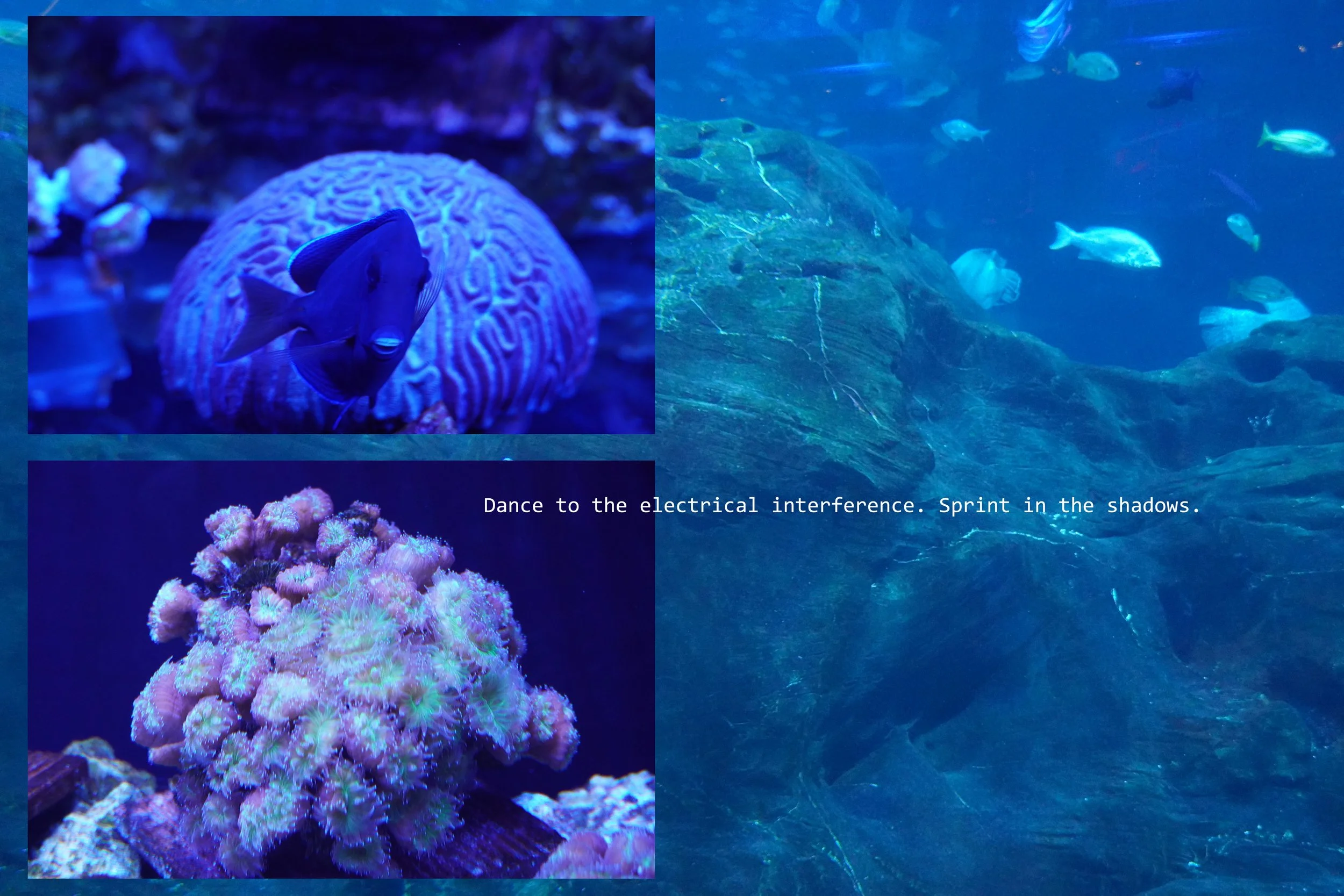
My practice is lens-based at the core and interdisciplinary in nature. Spanning photographic assemblage, glass assemblage, moving-image, creative writing, and arthouse documentary photography, my work uses integrative methods, both with experimental use of materials and combining disciplines, to create compositions which speak to the purpose of contemporary identity in the digital era. The photographs and use of creative writing which are integrated throughout the works explore unusual sensory experiences containing enchanted and ethereal connotations.
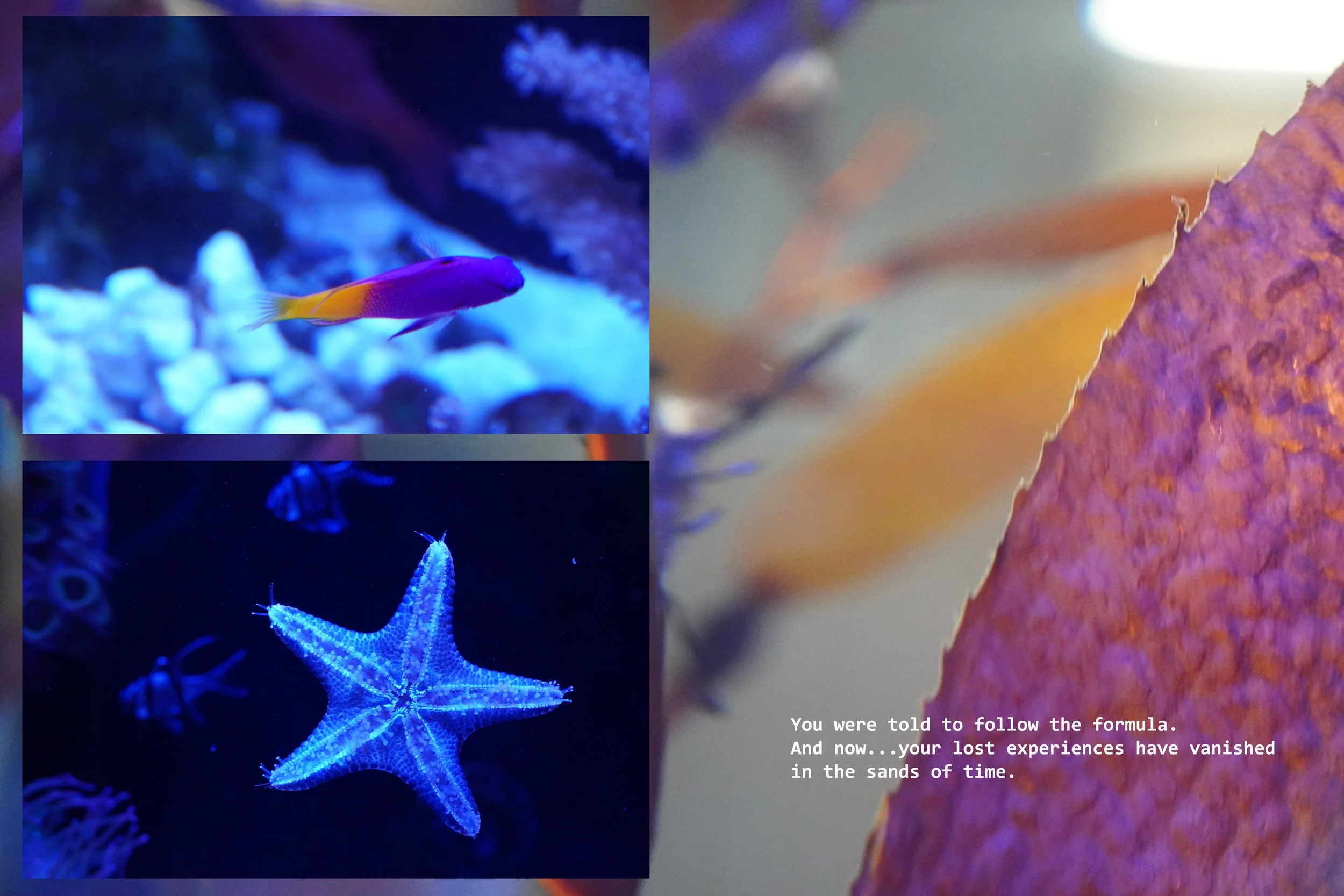
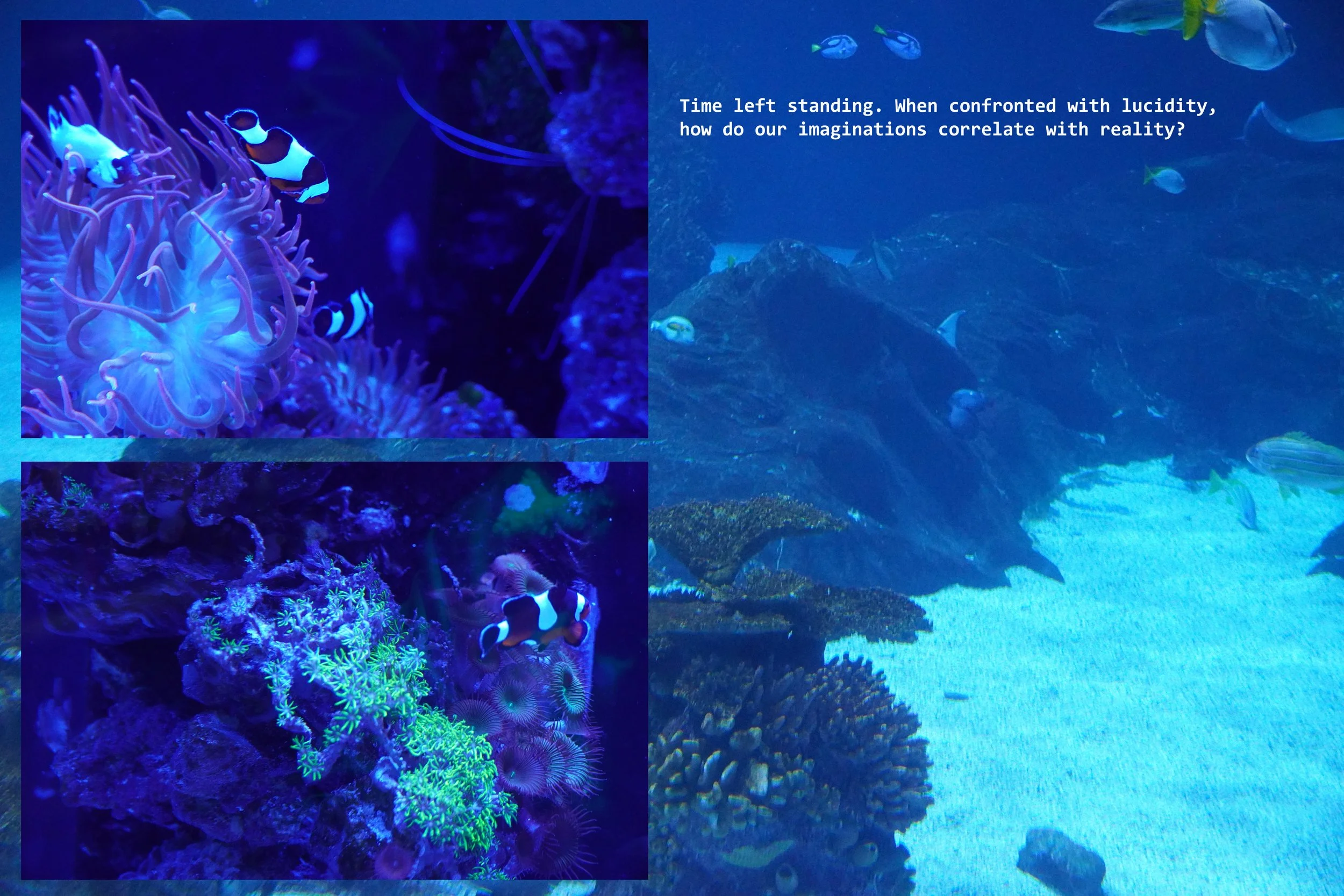
From capturing the textures of glowing neon-colored coral with clownfish and other forms of aquatic life to the ominous presence of an empty ballroom in a luxury hotel to the light particles emanating off sunlight, lamps, and street lights on to the streets and linen-wrapped interiors, my practice is based on identifying experiences which has the viewer question their illusory experiences and environments. One of the most important components of my work is there is no post-production editing to any of the raw images. In my photography, photographic assemblages, moving-images, and photo-based works, the photographs have no digital alterations, enhancements, or effects. For example, even though my photographic assemblages have images combined and texts added in Photoshop, the photographs themselves are unaltered.
Same with my moving-image works, the videos have music and texts added with a video editor as well as the general editing, but the actual raw footage of the films are untouched. Through integrative practice and raw, unfiltered imagery, my lens-based arts, in all forms, reveals a dichotomy between perception and interpretation. Through careful chosen subject matter, lighting, conceptual composition, and applied texts, my works communicate a sense of isolation and despair yet an unnerving aesthetic which offers experiences which are engaging, lucid, and enchanted. With unfamiliar sensory experiences and composure which draws attention to peculiarity, the viewer will find in the lens-based works a sense of escapism within the confines of captured reality.
‘‘My journey has been defined by an unrelenting drive to be avant-garde and create works which challenge us to question our identity as well as our environments’’
What are some of your earliest artistic memories, and how do they continue to influence your work today?
My earliest memory as an artist was receiving praise for artworks I made at the age of eight, since then I dedicated myself to becoming a professional artist and never looking back. In reality, my work is not influenced by my past, but rather the present and future. I wa a painter for 33 years from the ages of 8 to 41, but decided to give up the practice in favor of photography. My photography quickly led to an interdisciplinary practice incorporating photographic assemblage, glass assemblage, infused creative writing, and moving-image.
I believe as an artist, my journey has been defined by an unrelenting drive to be avant-garde and creating works which visually challenge us to question our identity as well as our environments.
Can you walk us through your creative process from initial concept to finished artwork?
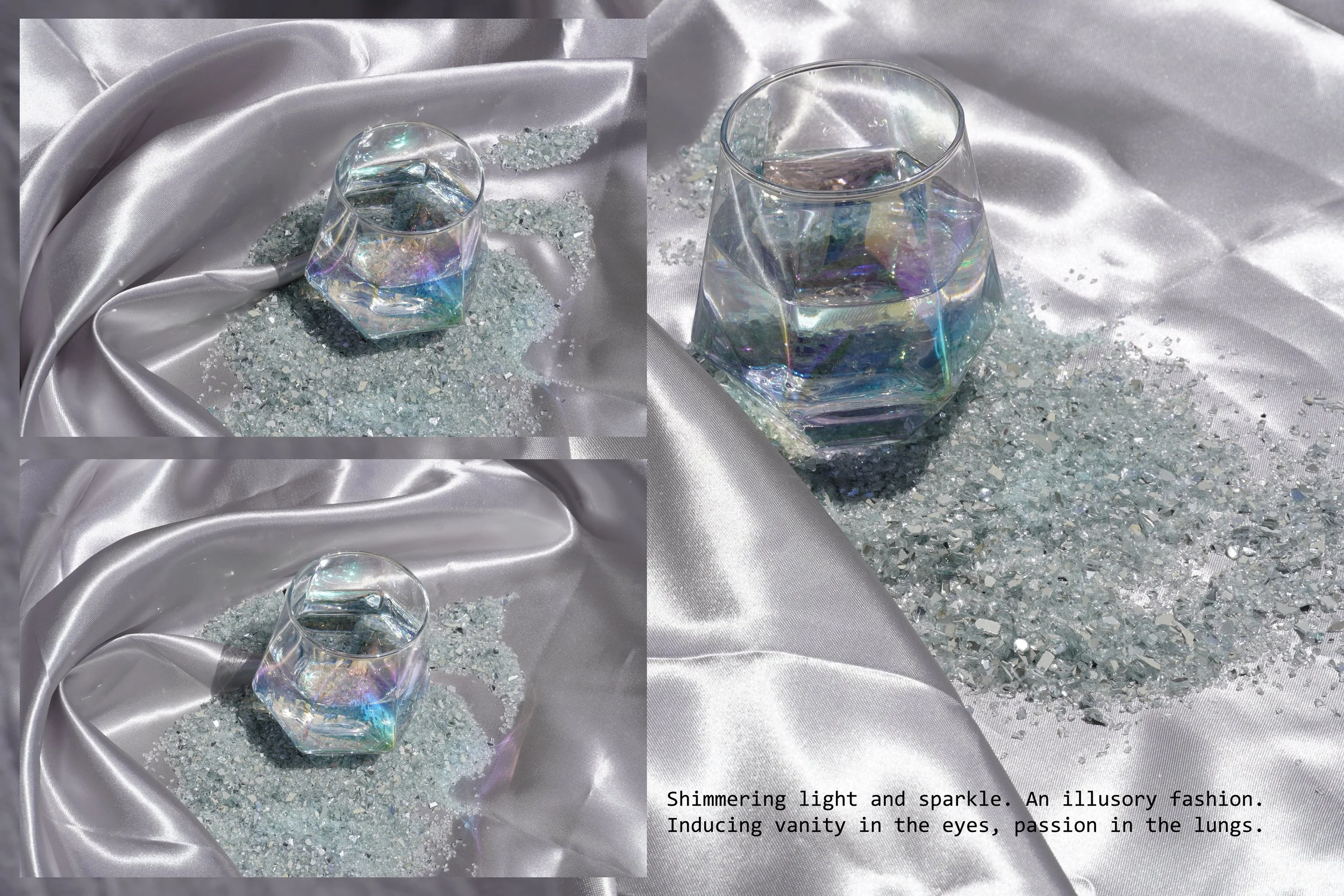
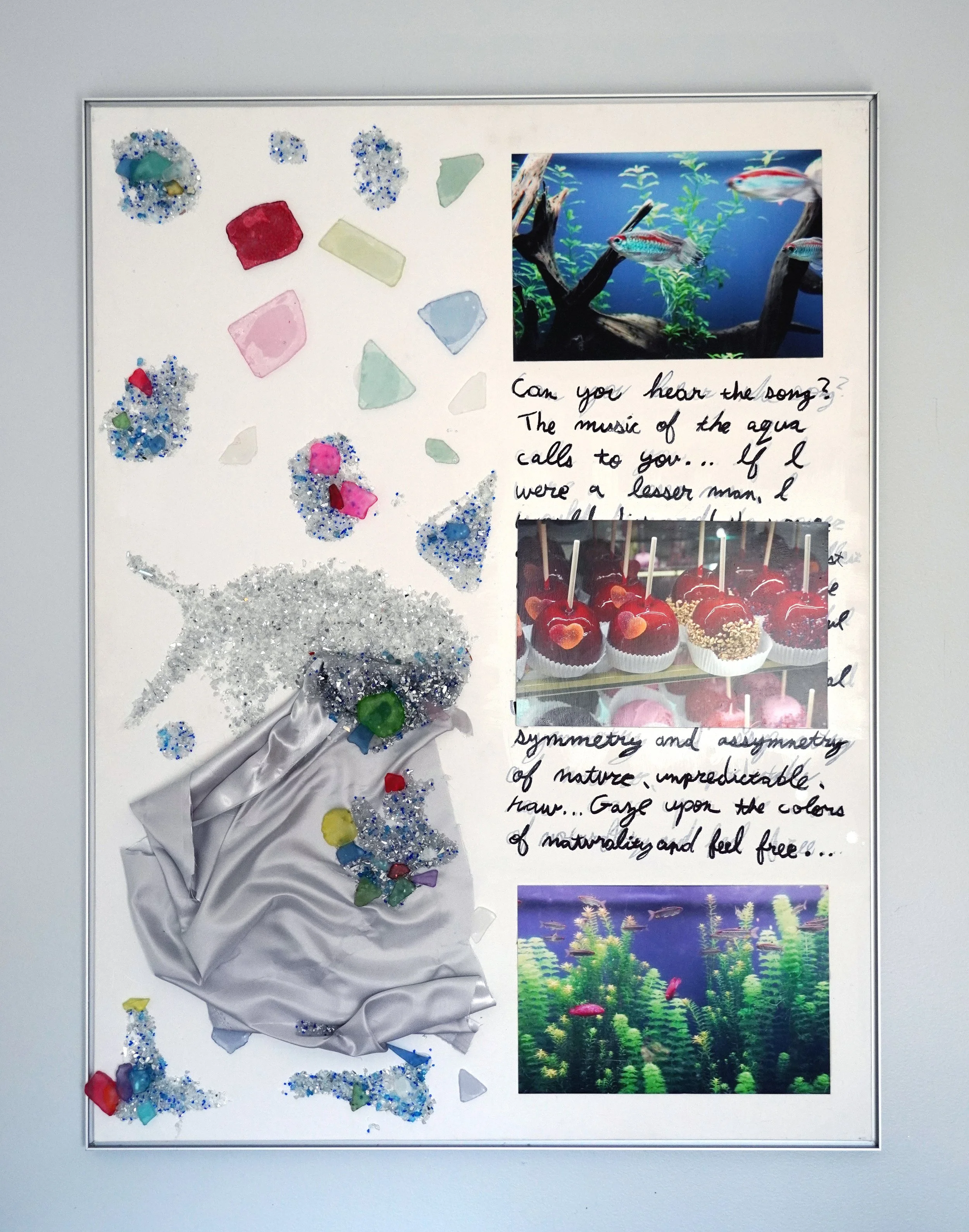
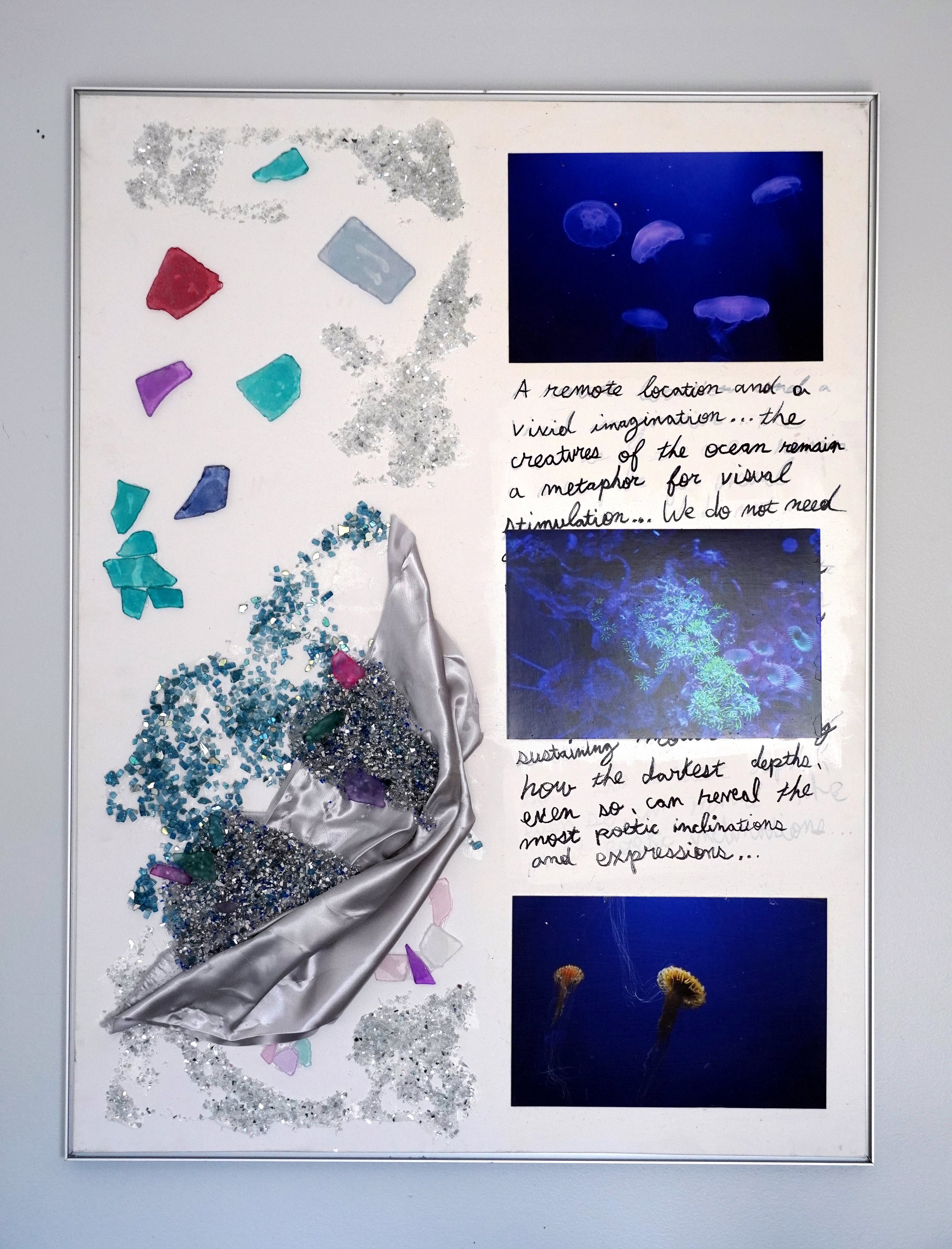
All of the photography and moving-images are based on no post-production editing. The reason for this is because I want to preserve the raw documentative nature of my subject and atmosphere captured in the film. After I have captured my unedited photography, the images are then assembled together with texts added to create photographic assemblages. In the glass assemblages, the photographs are attached to canvas and also contain sea glass, crushed glass, satin fabric, and creative writing in ink, all assembled together on one surface. In the moving-image projects, although the film is edited with music added, the actual raw footage is unaltered and has no digital effects or alterations.
My arthouse documentary photographs can be exhibited by themselves, but they are rarely displayed in such a way. Usually, these isolated photographs are assembled into an assemblage, such as a photographic assemblage or glass assemblage. In my moving-images, I often capture aquatic life with my camera and then later on add ominous text and music to the footage.
As a result, the use of texts is vital in my work. As a professional writer and publisher, the written word has potent meaning towards my identity as a person within the information age. Philosophical and poetic texts become applied throughout my work in order to bridge an interdisciplinary cognition of bridging and combining several practices of artistic interpretation into a singular, dynamic form.
Looking back on your artistic journey, what has been the most significant turning point in your career?
I would like to first start by saying I am an independent mid-career artist who will probably never obtain official gallery representation. This is because my work is highly experimental in nature, outside the mainstream, interdisciplinary, and somewhat anti-commercial. Which is why I appreciate Arrival Gallery’s support of independent, alternative, and experimental artists working in interdisciplinary practices.
With this being said, I have achieved some notable achievements on my curriculum vitae, which includes a solo exhibition in Chelsea, Manhattan, New York with the Wix Gallery and a one year exhibition on Park Avenue, also in Manhattan, with Hogarth Worldwide during the early part of my art career. More recent recognizable achievements include my first international exhibition in Rome in 2025 with LoosenArt and later on in 2026, additional exhibitions overseas in London and Paris for the first time with Arrival Gallery. I believe exhibiting internationally is important for my career because I expand my audience far beyond my initial region, which would be the state of New Jersey. Other noteworthy achievements include multiple solo exhibitions with The Colonnade : performing arts theatre in North Georgia, United States and The Greenpoint Gallery in New York.
I am actually much more well known as a publisher and writer on critical essays pertaining to experimental art than I am for being a visual artist. Although, my work as an established publisher rarely helps me in my art career in any capacity, despite the fact I have literally written about and published some of the most successful artists in the world.
In regard to Arrival Gallery, I believe connecting with your gallery has been a turning point in my career for helping me expose my work on an expansive international stage to a broader audience outside my initial region as well as providing me with prestige of exhibiting in major cities such as London and Paris. The publication of this interview with Arrival Gallery will also help educate the public on the multi-faceted aspects of my practice.
What challenges have you faced in developing an interdisciplinary practice, and how have those challenges shaped your work?
The biggest challenge any artist faces is who to listen to. There are many different opinions and various established ‘rules’ within the contemporary art world which pushes artists not to stray too far outside the mainstream. In the end, nobody has a more invested interest in an artist’s work than the artist themself.
In regard to my own practice, my own judgement has often served as the best guide as to how to advance forward with my practice. My work is entirely developed on my own with no ’borrowed’ or stolen ideas through hard work and genuine experimentation of trial and error. I will say though, the single best decision I made in my life was to quit painting and drawing. By doing this, I was able to open up my mind to various modes of artistic practices, such as glass, textiles with satin fabric, the infused written word, photographic assemblage, arthouse documentary photography, experimental moving-image, etc. One of the aspects I love about being a lens-based artist is I am forced to go out in the world to find interesting subject matter and environments to photograph and film. This gives a feeling of genuine exploration as opposed to being cooped up in a studio working on a canvas for seemingly endless hours. Even when I set up conceptual still lifes, there is a sense of investigation, of experimentation based in finding the right objects and placement as opposed to being concerned about craft and technique.
Although my art does not directly correlate with another artist, the artists I write about with Point Pleasant Publishing give me inspiration and encourages me to push boundaries beyond my initial comfort zone. As an artist, I am not so much concerned with the commercial aspects of my work outside of presentation, but rather experimenting with exploring the deepest depths of the human psyche and deconstructing our environments to have greater purpose beyond technique and design principles, a level of comprehension based on obtaining deeper understanding on how visual and interdisciplinary capacity expands our minds to unfamiliar dimensionality.
Your projects often combine visual and written language. Do words emerge before the image, or does the image demand language afterward?
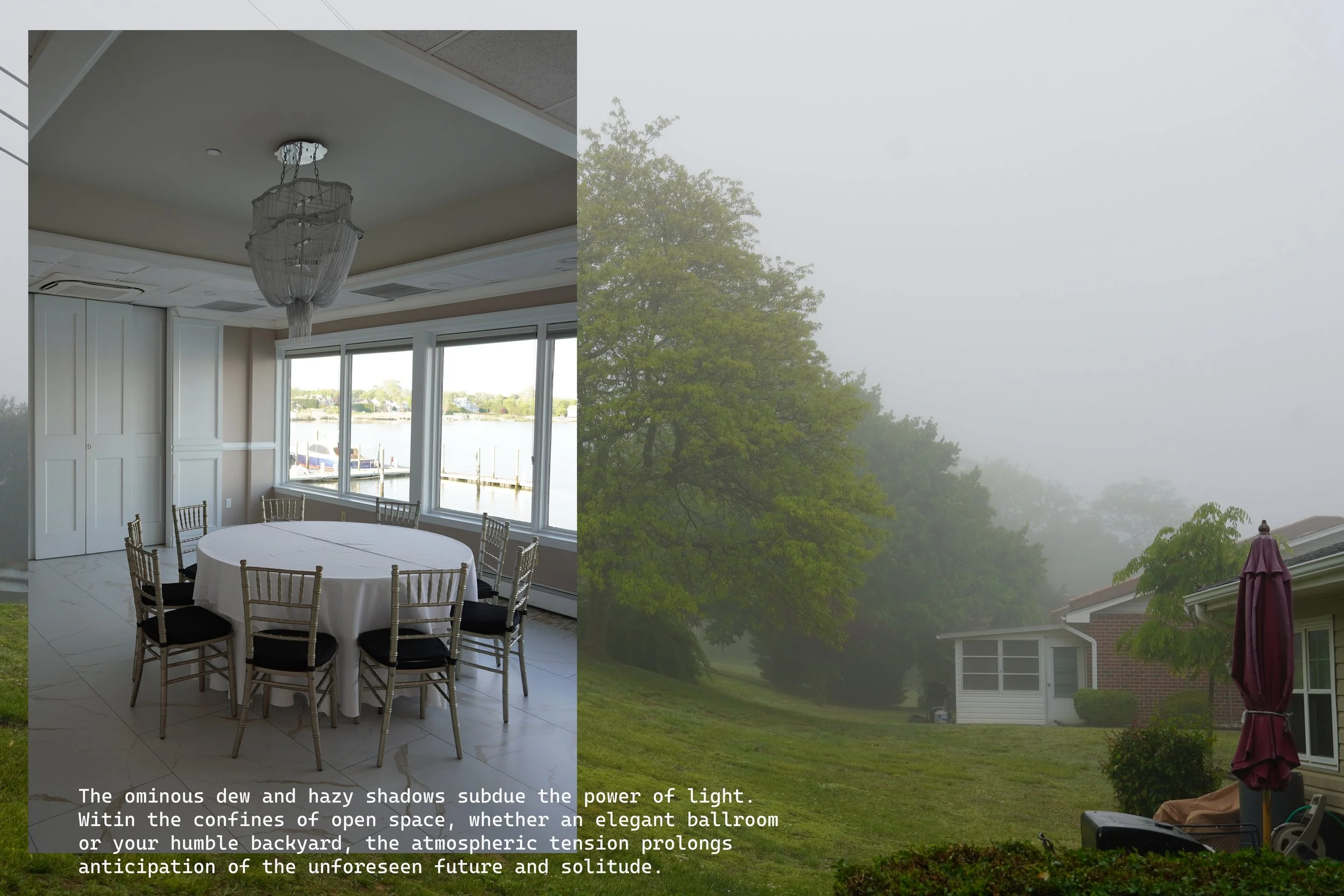
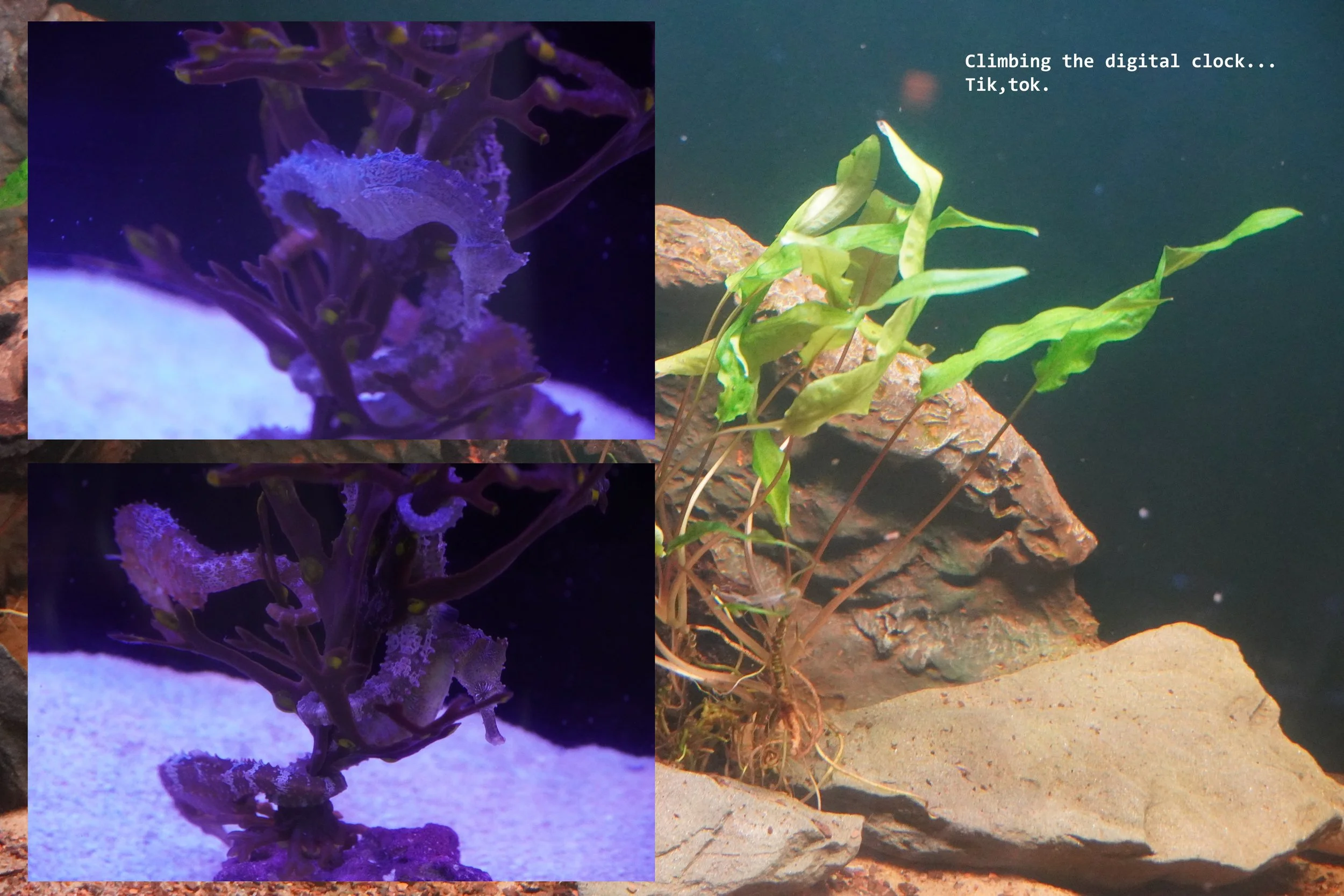
The way I formulate the writing in my work is fluxus in nature. I will first start with a concept, usually a notion based on emotional or sensory impulses, such as nihilism, despair, or isolation. After the initial concept is formulated, I type or write down the first stream-of-conscious phrases which come to mind in regard to the concept. The concept is derived from the assembled imagery, rather than from a single image. As a result, the texts are an interpretation in real-time of my own image-making process. I often photograph subjects and environments which have ambiguous, unfamiliar, and enchanted qualities, such as the coral and clownfish or seahorses within an aquarium, an empty dark ballroom in a luxury hotel, or even ominous night scenes of my local area. The texts use these unclear imagery which hint at a narrative and applies a conceptual interpretation based on applying a deeper purpose to visual imagery outside of presentation and image-sharing.
Do you see your work as a way of documenting the world, questioning it, or reimagining it?
Great question. All three for sure. Although the basis of my interdisciplinary practice is grounded in arthouse documentary photography, I expand on these interpretations by applying texts and assemblage elements.
In terms of my moving-images, although these formulations are based on documentary-based film, they are transformed into arthouse projects with a distinct narrative which questions and reimagines these dream-like sequences, particularly sea-life and aquatic environments as well as how such images relate to the purpose of contemporary identity.
With the photographic assemblages and glass assemblages, the juxtaposition of multiple images at once along with infused texts and other materials also questions and reimagines raw, unedited visual substance to have profound impact and meaning. Through these constructions, a narrative and stream of consciousness becomes brought forth where the viewer will question the purpose of not only the artwork, but also of themselves along with their placement in the world as well as reimagining the value of visual communication outside mainstream practices.
Documenting, questioning, and reimagining the world through my art is essentially what makes me an experimental artist. Without deconstruction or thoughtful interpretation, visual art cannot break outside the confines and barriers of familiarity and comfort.
Working from your studio at the New Jersey Shore, how does your environment influence the atmosphere or themes of your work?
The state of New Jersey is an interesting place. Although the state has had a historical reputation for being low-class (thanks to the Jersey Shore MTV show and other stereotypes), the ‘armpit of New York’, rude, and dirty…the exact opposite is true. In recent years, New Jersey has become a financial powerhouse and amongst one of the very wealthiest states within the United States, as a result, this has led to additional advanced development in many areas. The New Jersey Shore region is notably very clean and well-developed. Also, I have traveled across the United States, and people in New Jersey are genuinely more authentic and friendlier than people in other states. And in terms of being smelly and dirty, the only smelly part of New Jersey is in portions of Elizabeth where there is a rendering plant and only small pockets of urban areas in Northern New Jersey can be regarded as unsightly. Although in recent years, even these areas have become more cleaned up with improved initiatives from local governments who provide better services. For example, in many parts of Northern New Jersey, they clean the streets at least once a week, as opposed to urban areas in other parts of the country where they don’t even bother with engaging in street cleaning.
As a result, New Jersey is an interesting and beautiful place to document with photograph and film. Almost my entire photographic and moving-image portfolio is based on scenery based in New Jersey, such as photography from Jenkinson’s Aquarium in Point Pleasant Beach and Adventure Aquarium in Camden as well as my series from The Oyster Point Hotel in Red Bank. I was born and raised in the state of New Jersey and have spent almost my entire life here, so this is my home.
What draws you to working across photography, creative writing, photographic assemblage, glass assemblage, and moving image instead of focusing on a single medium?
I think I would get bored if I just focused on a single format of visual art. The complexity and variation in my works offer different interpretations and wider scope to my audience to be left with a multitude of experiences as opposed to engaging with just one type of artwork. Working across disciplines also helps me better develop my conceptual approaches.
As an interdisciplinary lens-based artist, my goal besides expanding the lens-based arts is to bridge levels of understanding across multiple disciplines. For example combining assemblage (or collage) elements into my photography and incorporating texts and experimental audio into my moving-images and various assemblage work, I create a realm rich in providing a deeper arthouse experience to my audience. I believe art should be complex. Too often, figures in the artworld highlight simplicity in the arts. Although minimalist elements can be quite dynamic, incorporating interdisciplinary approaches to visual art, even with minimalist qualities, presents concepts with a deeper sense of purpose and narrative, even if the plot is indirect and vague. Some experts usually associate good art with clarity, however I disagree. There is a profound sense of depth when a work applies a sense of mystery and ambiguity towards a subject, leaving room for multiple interpretations as opposed to a fixed, formulaic message.
When you look at your body of work as a whole, what recurring ideas or visual languages feel most essential to your artistic identity?
I am often drawn to the motif of aquatic life and interiors. In regard to interiors, not just any random room will do, as I am quite selective. You will often find me photographing an over-stimulating arcade on the boardwalk, the refined interior of an upscale candy shop, or the ominous darkness of an unlit ballroom within a luxury hotel. These areas, especially when interpreted through interdisciplinary and experimental practices, provide a profound metaphor for the purpose of contemporary identity, such as ominous isolation from the ballroom or the glories of excess through candy and video-games.
The aquatic life within my work reflects atmospheric tension and beauty which is not always portrayed so clearly visually. Cropped shots of coral beds and aquatic fauna may have fantastical elements of other-wordly dimensions. These compositions and moving-images release a sense of macabre, unpredictable suspense, as if we are being watched by apparitional entities in our moments of isolation and silence.
What ideas, projects, or directions are you currently exploring, and what can audiences expect from your future work?
Lately I have been focusing more on my photographic assemblages and moving-image projects than I have been with my glass assemblages. One of the reasons is financial as the glass assemblages are quite expensive to create and require a decent amount of savings in order to construct in batches. In all formats, the photographic assemblage work is what I place most of my energy on.
I am always searching for environments which offer unique, experimental, provocative, and unpredictable interpretations. As a result, I believe the art of photography and moving-image is really about exploring and finding the right place at the right time at the right angle. Although my work is consistent, I never try to formulate my work into static messaging. My intention is always to expand my conceptual approach and interpretations as well as increasingly refine the way I combine disciplines into singular formats which provide profound meaning and scope to contemporary identity.
Beyond aquatic life, I am increasingly exploring how urban and suburban environments and settings provide meaning and purpose to our sense of inner-dimensionality. In essence, these areas are largely how we define our emotional and sensory experiences and require further development not only from a visual perspective, but also from a literary interpretation as well. Investigating post-apocalyptic urban nihilism in my work sounds really cool, no? Definitely not boring.
Discover more: Website
