
Group openings are not studio visits. Light is mixed, sound is high, and most conversations last under three minutes. The goal is not to deliver a lecture; it is to help someone remember what they are looking at and how to find you afterwards.
This note is for artists showing in group exhibitions—including Arrival Gallery openings in cities such as Paris (6–8 November 2026) and London (13–15 November 2026). It does not replace curatorial guidance on your specific hang.
Prepare three short answers (not a speech)
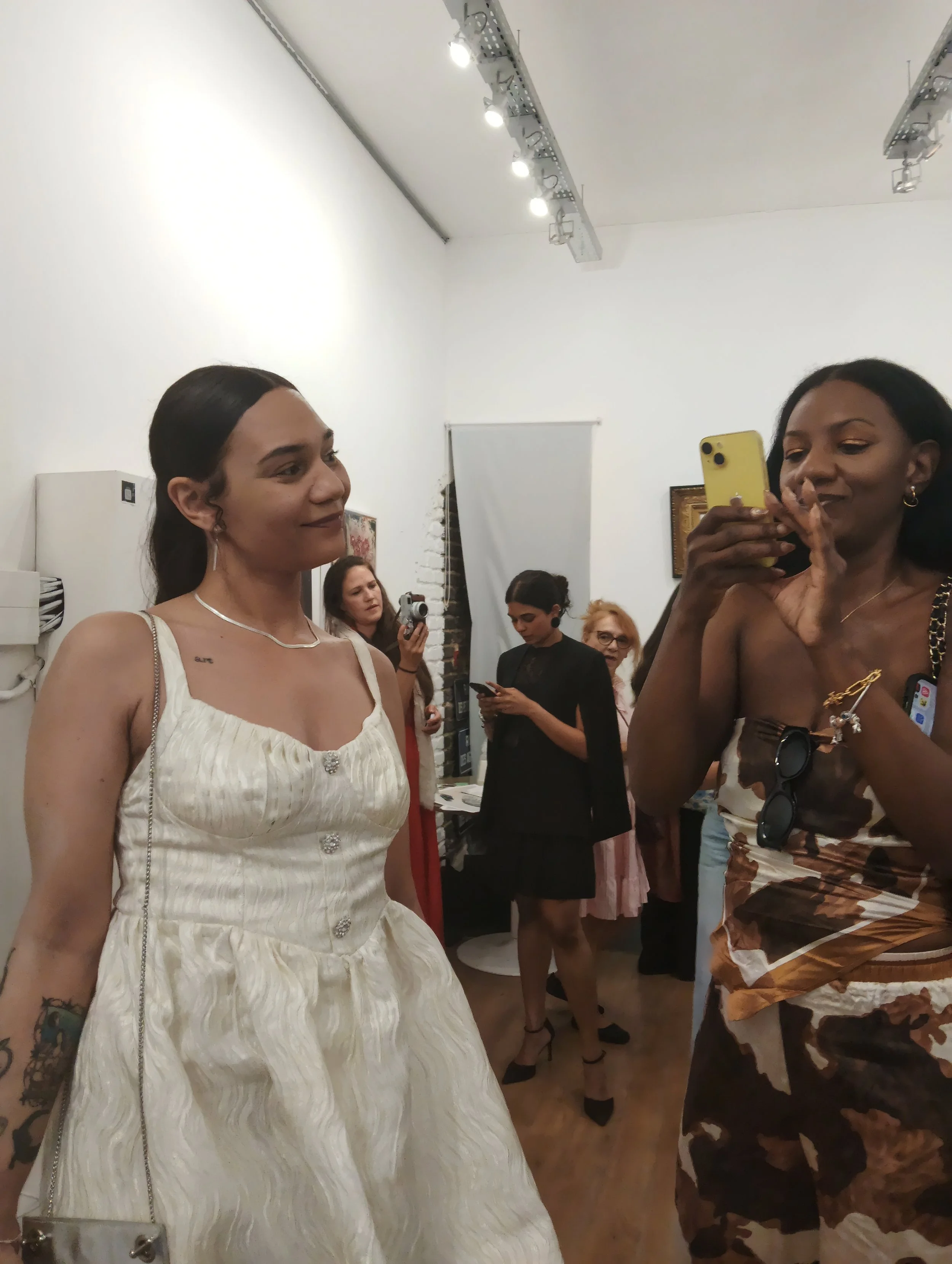
Photo: Arrival Gallery
Before the night, write—and then say aloud—three answers you can finish in about thirty seconds each:
What is it? Medium, scale, and series name if you have one. Example: “These are oil on linen, part of a series about night walks.”
What holds it together? One clear concern—process, place, material—not a list of themes.
How can someone follow up? Instagram handle, email, or price list process—whichever you actually check.
If you need longer context, point people to your artist statement online rather than performing it in the room. We have separate guidance on writing a statement that sounds like you.
Lead with what the viewer can already see
Openings reward concrete language. “This panel is birch; the black is layered ink” is more useful in a crowded room than “it explores liminality.” Save the wider research story for a quieter follow-up.
If two works hang as a pair, say that once: “These are meant to be read left to right.” Visitors should not have to guess the relationship.
Price talk without freezing
If someone asks the price and you are ready to sell:
Give the figure (and currency) clearly.
Say what it includes (framed / unframed / edition number).
Know who handles invoices for that show—Arrival or you—and say so.
If the work is not for sale, say that early so the conversation can move to commissions or available related pieces. Avoid apologising for either choice.
What to skip on the night
Comparing yourself to other artists on the wall. It makes everyone uncomfortable and rarely helps the viewer.
Long origin stories that start years before the work. Offer a one-line origin, then stop.
Critiquing the hang or the lighting to guests. Raise logistics with the organisers privately.
Collecting contacts on your phone while blocking the work. Step aside; let others see the piece.
When you do not know the answer
“I don’t know yet—I’m still testing that varnish” is better than inventing a theory. Curators and collectors are used to process honesty; they are less patient with vagueness dressed as mystery.
For what we look at before a show is even hung, see What Curators Notice First in Artist Submissions.
Aftercare while you are still in the room
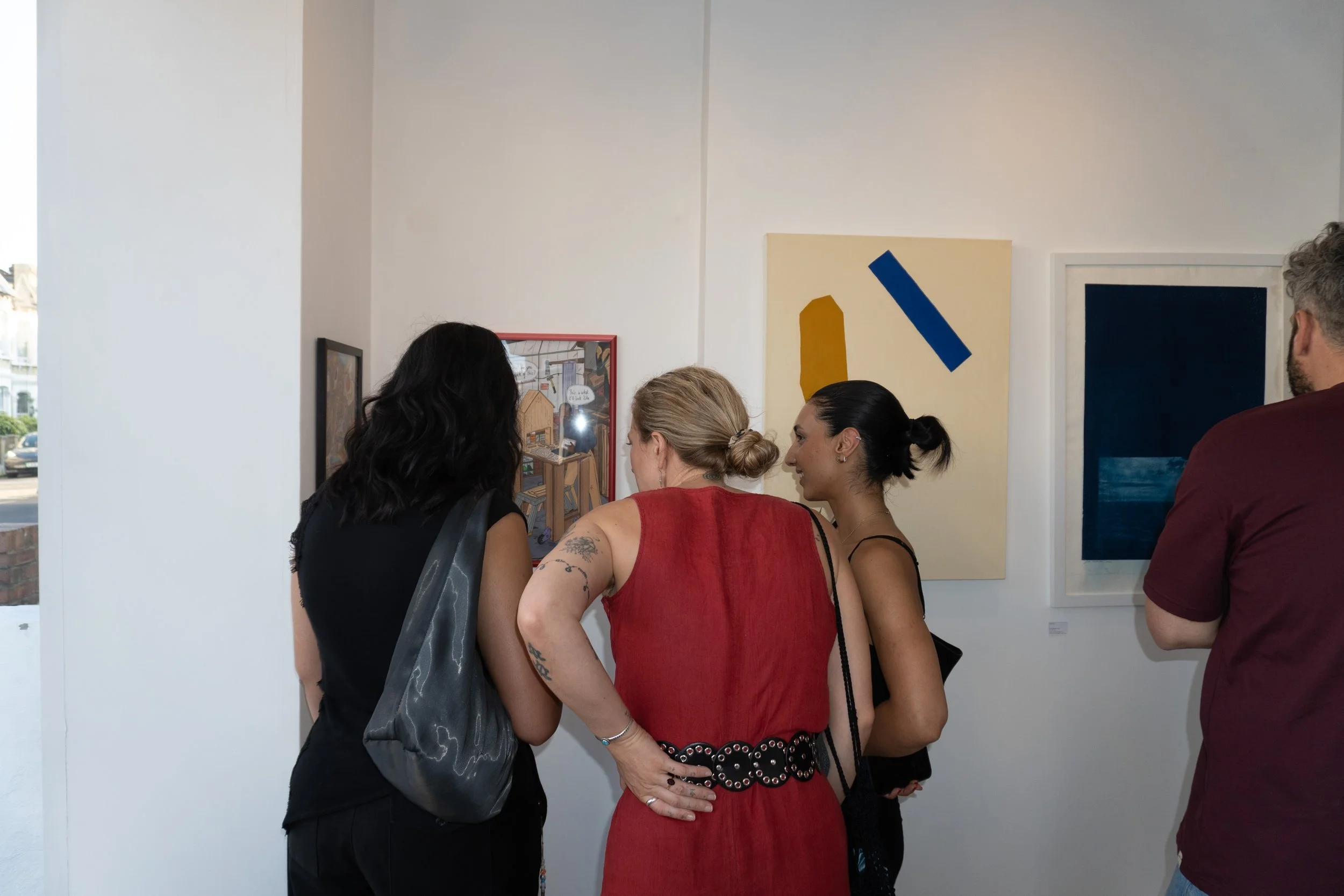
Photo: Arrival Gallery
Carry something small and physical if it helps: a card, a QR to your site, or a printed list of titles. Digital-only follow-up fails when battery or signal fails.
If someone asks for a studio visit or a call, propose a window in the following week—not “sometime.” Write their name down immediately.
Arrival openings specifically
Our exhibitions are ticketed free on Eventbrite for capacity. Arrive early enough to stand with your work for the first rush; then circulate so visitors can photograph and approach without you glued to the wall the entire night. City tickets and open calls are listed on /events and /opencalls—we only share links that currently resolve.
For a wider first-show checklist (shipping, labels, install day), use Your First Group Exhibition: A Practical Checklist.
One-page rehearsal
The afternoon before opening, rehearse once with a friend:
30 seconds on the work
10 seconds on price or availability
10 seconds on how to contact you
If you cannot say it without notes, shorten it until you can.